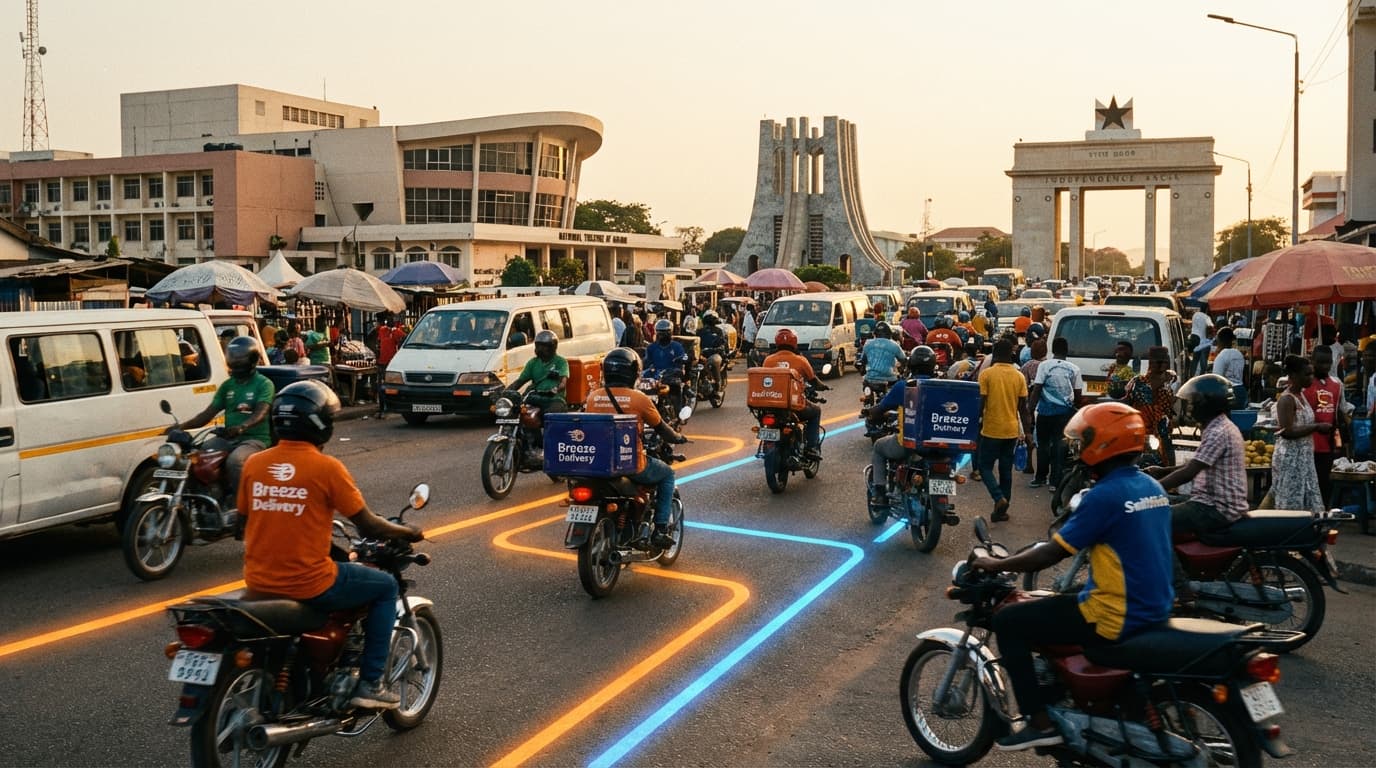
At 2:47 PM on a Thursday, the operations manager at a Tema-based logistics company watched his screen as three delivery trucks sat motionless at a chop bar in Madina. The drivers had clocked them as "en route to Achimota."
One phone call later, three trucks were back on schedule. The company recovered 2 hours of lost productivity - and the drivers knew they were being watched.
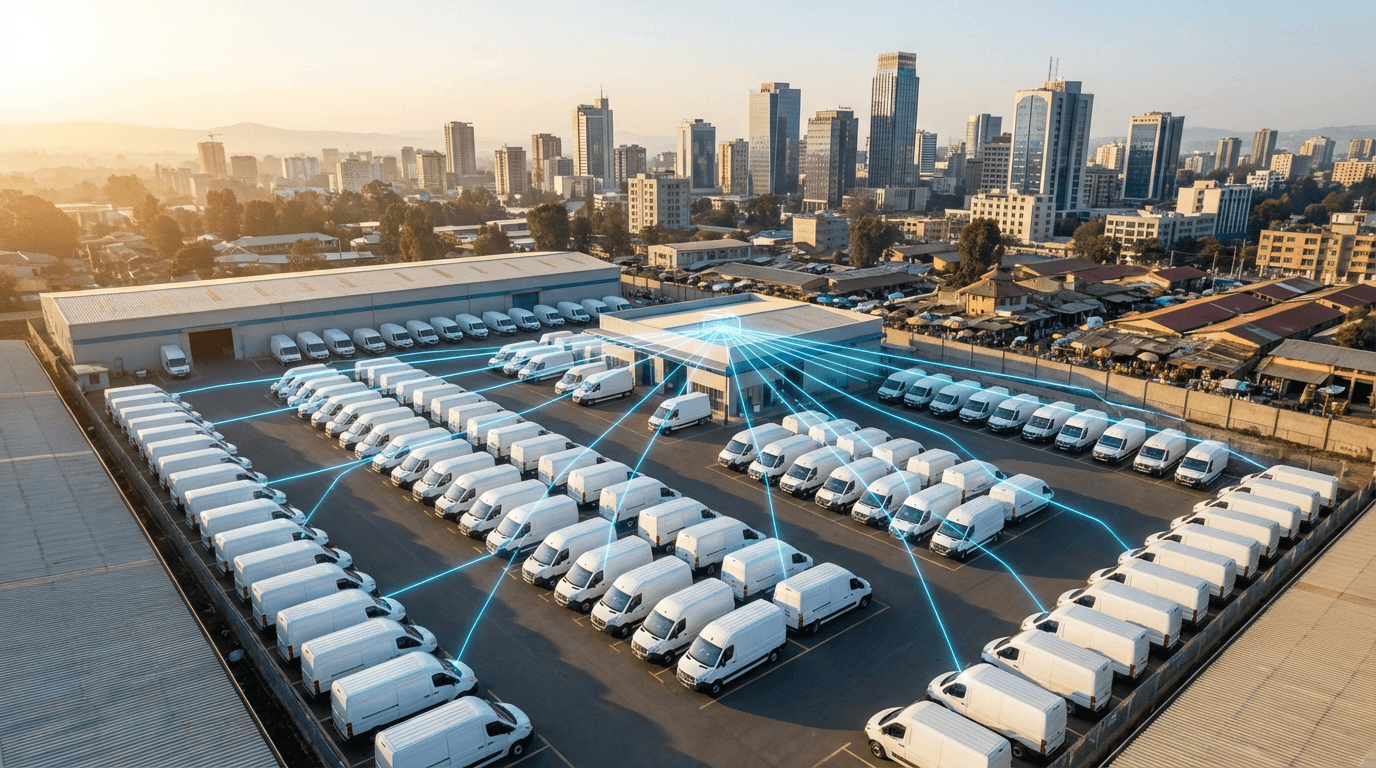
This is real-time vehicle tracking in action. Not just dots on a map, but visibility that transforms how Ghana businesses operate.
What "Real-Time" Actually Means
Let's be precise. Real-time tracking means:
Location updates every 10-30 seconds when the vehicle is moving. Not every 5 minutes. Not every hour. Updates fast enough that you can watch a vehicle navigate traffic on your screen.
Instant alert delivery. When something happens (unauthorized movement, geofence breach, speeding), you know within seconds - not minutes.
Live speed and direction data. Not just where the vehicle is, but how fast it's going and which way it's heading.
Compare this to basic tracking that updates every few minutes or requires you to request a location. By the time you get that information, the vehicle could be kilometers away.
Real-time visibility changes decision-making from reactive to proactive.
The Business Impact: Real Numbers from Ghana Companies
We work with over 400 businesses across Ghana. Here's what they report after implementing real-time tracking:
Fuel Cost Reduction: 15-25%
How it happens:
- Drivers eliminate unauthorized personal trips (knowing they're monitored)
- Route optimization reduces total distance driven
- Idling alerts cut fuel wasted at unnecessary stops
- Speeding reduction improves fuel efficiency
Example: A water delivery company in Accra tracked fuel spending of GH₵28,000/month across 12 trucks. After 6 months with real-time tracking: GH₵21,500/month. Annual savings: GH₵78,000.
Delivery Time Improvement: 20-35%
How it happens:
- Dispatchers assign nearest available vehicle to new orders
- Real-time traffic awareness enables route adjustments
- Eliminated "lost time" (drivers who disappear mid-route)
- Accurate ETAs improve customer scheduling
Example: A pharmaceutical distributor serving hospitals across Greater Accra improved average delivery time from 4.2 hours to 2.8 hours. They now complete the same deliveries with 2 fewer vehicles.
Customer Satisfaction: Measurable Improvement
How it happens:
- "Your delivery will arrive in 23 minutes" replaces "sometime today"
- Customers can track approaching vehicles themselves
- Disputes over delivery times resolved with data
- Faster problem response when issues occur
Example: A furniture company in Kumasi reduced customer complaints about late deliveries by 67% after implementing customer-facing tracking links.
Unauthorized Use Elimination: 100%
How it happens:
- Drivers know every kilometer is logged
- After-hours movement triggers immediate alerts
- Weekend and holiday vehicle use becomes visible
- Side jobs using company vehicles become impossible to hide
Example: A construction company discovered their project manager was using company vehicles for personal transport business on weekends. Real-time tracking ended it immediately.
Features That Drive Business Value
Live Map View
See all your vehicles on one screen, updating in real-time. Color-coded status shows:
- Green: Moving
- Yellow: Idling (engine on, not moving)
- Red: Stopped
- Gray: Offline/no signal
Click any vehicle for instant details: current location, speed, driver name, next scheduled stop.
Instant Dispatch Optimization
A new order comes in for Tema. Your dispatch screen shows:
- Vehicle A: 12 km away in Spintex, available
- Vehicle B: 8 km away in Teshie, completing delivery in 10 minutes
- Vehicle C: 25 km away in Kasoa, available
Real-time data enables intelligent assignment - not guessing.
Customer ETA Links
Generate a tracking link for customers. They click and see:
- Vehicle location on map
- Estimated arrival time (continuously updated)
- Driver contact information
No more "where's my delivery?" calls. Customers can see for themselves.
Speed Monitoring and Alerts
Set maximum speeds by vehicle or route:
- City driving: 50 km/h
- Highway: 100 km/h
- Residential areas: 30 km/h
Instant alerts when limits are exceeded. Weekly reports rank drivers by violation frequency.
Why it matters: Speed-related accidents are the leading cause of commercial vehicle damage in Ghana. Reducing speeding saves vehicles, saves lives, and reduces insurance claims.
Geofencing for Operations
Create virtual boundaries that trigger alerts:
Operational zones:
- Alert when vehicle arrives at customer location
- Alert when vehicle leaves warehouse
- Alert when vehicle enters competitor premises
Time-based rules:
- No alerts for warehouse entry during work hours
- Alert for ANY movement after 6 PM
- Weekend movement alerts
Example configurations:
- A sales team's vehicles trigger alerts when entering competitor dealership locations
- Delivery vehicles alert when leaving designated routes
- Service vehicles alert when spending more than 30 minutes at a single location
Historical Playback
Review any vehicle's exact route for any past day. See:
- Complete path driven
- All stops (location and duration)
- Speed at every point
- Total distance and time
Use cases:
- Verifying expense claims
- Investigating customer complaints
- Analyzing driver efficiency
- Providing evidence in accident disputes
Industry Applications in Ghana
Logistics and Delivery Companies
Challenges addressed:
- High fuel costs from inefficient routing
- Driver accountability across long distances
- Customer demands for visibility
- Vehicle utilization optimization
Key features used: Real-time dispatch, customer tracking links, route history, fuel monitoring
Typical ROI: Break-even in 3-4 months through fuel savings alone
Sales and Field Service Teams
Challenges addressed:
- Verifying customer visits
- Territory coverage optimization
- Mileage claim accuracy
- Meeting customer appointments
Key features used: Visit verification (geofence + time stamp), territory reports, mileage tracking
Typical ROI: Increased customer visits per day (20-40% improvement)
Construction and Project Companies
Challenges addressed:
- Equipment theft (extremely common in Ghana)
- Unauthorized use of vehicles
- Fuel theft from construction equipment
- Asset location across multiple sites
Key features used: After-hours movement alerts, fuel monitoring, equipment tracking, multi-site visibility
Typical ROI: Prevention of a single equipment theft pays for years of tracking
Transportation and Rental
Challenges addressed:
- Vehicle misuse by renters
- Cross-border violation detection
- Mileage verification
- Vehicle recovery after failed return
Key features used: Geofence (Ghana border alert), immobilizer, trip logging, customer tracking
Typical ROI: Recovery of a single abused rental vehicle covers entire fleet's tracking for years
Healthcare and Emergency Services
Challenges addressed:
- Fastest response to emergency calls
- Cold chain monitoring for medical supplies
- Accountability for ambulance response times
- Asset tracking for mobile medical equipment
Key features used: Real-time dispatch, temperature monitoring, response time analytics
Typical ROI: Measured in lives saved and service quality improvement
Implementation: How to Get Started
Step 1: Assessment (Week 1)
We analyze your operation:
- Number and type of vehicles
- Current challenges and goals
- Existing processes and systems
- Staff who will use the system
Output: Customized implementation plan with timeline and pricing
Step 2: Installation (Week 2-3)
Professional installation across your fleet:
- Scheduled around your operations (minimal downtime)
- Concealed placement for security
- All features tested before handover
Timeline: Typically 1-3 vehicles per day depending on vehicle type and location
Step 3: Training (Week 3)
We train your team to use the system:
- Operations managers: Full platform training
- Dispatchers: Real-time features focus
- Drivers: Mobile app and expectations
- Management: Reporting and analytics
Duration: 2-4 hours per user group
Step 4: Go-Live Support (Week 4)
Dedicated support during your first operational week:
- Daily check-ins
- Immediate issue resolution
- Adjustment of alerts and settings
- Additional training as needed
Step 5: Ongoing Optimization
Monthly reviews identify improvement opportunities:
- New feature utilization
- Alert tuning
- Reporting refinements
- ROI tracking
What You'll Need
Technical Requirements
- Vehicles with standard 12V or 24V electrical systems
- Staff smartphones (iOS or Android) or computer with internet
- Someone designated to manage the system
- Internet access for platform use (mobile data works fine)
Organizational Requirements
- Clear policy on vehicle tracking (we provide templates)
- Driver communication about monitoring
- Process for acting on tracking data
- Defined goals for the implementation
Budget Requirements
Per vehicle first year: GH₵1,500-2,500 depending on features Per vehicle ongoing: GH₵700-1,200/year
Fleet discounts available: 10-20% for 5+ vehicles
Common Concerns (And Honest Answers)
"Won't drivers resist being tracked?"
Some initial resistance is normal. Experience shows:
- Good drivers welcome accountability (it protects them too)
- Resistant drivers often have something to hide
- Clear policy and communication reduce friction
- 90% of drivers accept tracking within the first month
"What about driver privacy?"
Tracking is for company vehicles during work hours. We recommend:
- Clear policy shared with all drivers
- Tracking disabled during personal use (if allowed)
- Data used for improvement, not punishment
- Transparency about what's monitored
"Is the data secure?"
AcesTrack uses enterprise-grade security:
- Encrypted data transmission
- Secure cloud storage
- Role-based access control
- Audit logs for all data access
"What if network coverage fails?"
Our trackers:
- Use multi-network SIMs (automatic network switching)
- Store data locally when offline
- Transmit stored data when coverage returns
- Show last known location if currently offline
Take the Next Step
Real-time vehicle tracking isn't a future technology - it's what successful Ghana businesses use today. The question isn't whether tracking will benefit your operation. The question is how much you're losing by not having visibility into your fleet.
AcesTrack has helped over 400 Ghana businesses implement real-time tracking. We understand local conditions, network challenges, and business needs.
Request a free fleet assessment. We'll analyze your operation and show you exactly what real-time tracking would mean for your business - with projected ROI based on your specific situation.
Your competitors may already be watching their vehicles. It's time you could too.