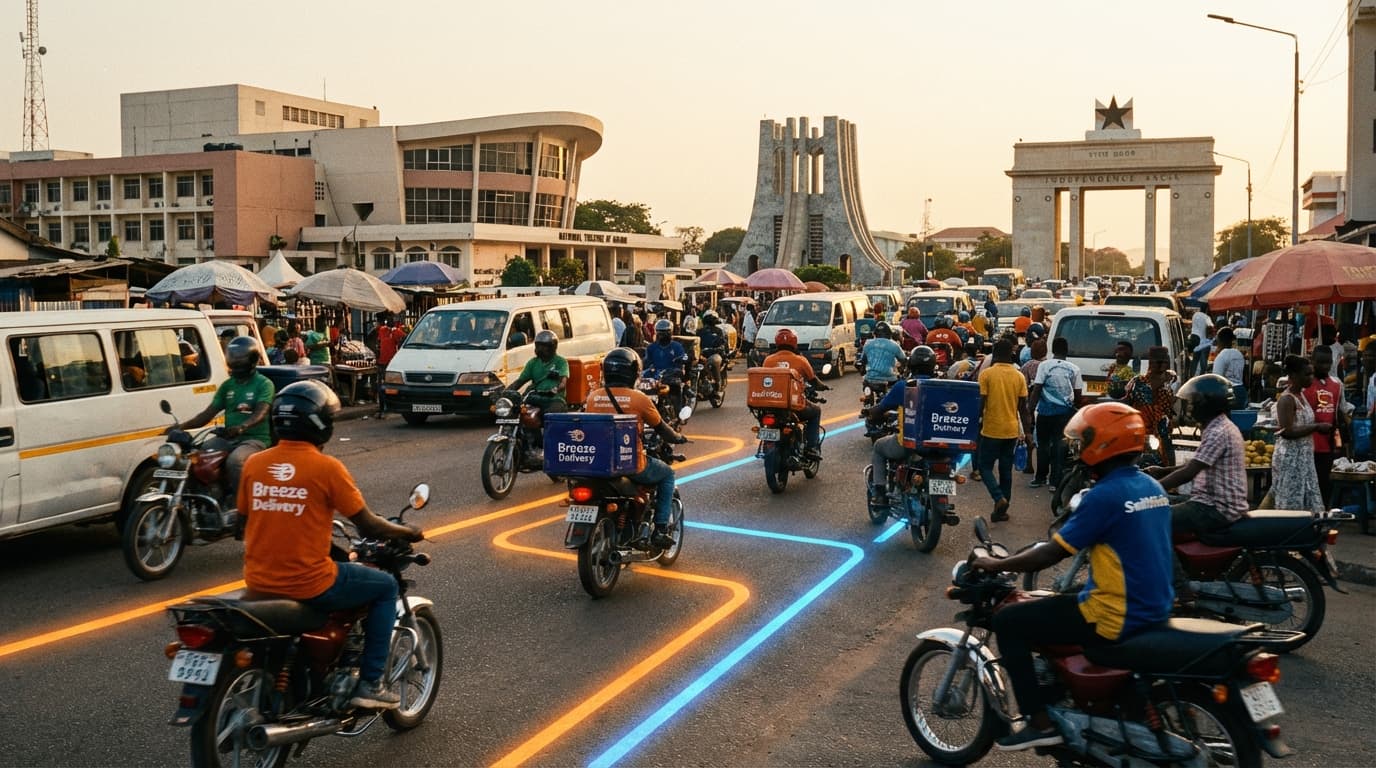
Running a fleet in Ghana - whether it's 3 delivery bikes or 30 trucks - presents unique challenges: unpredictable traffic in Accra, fuel costs that eat into margins, drivers who take unauthorized detours, and maintenance that always seems to happen at the worst time.
But here's what separates struggling fleet operations from profitable ones: systematic management. The businesses that thrive aren't necessarily bigger or better funded - they're smarter about how they manage their vehicles and drivers.
This guide shares 10 proven fleet management strategies that Ghana-based businesses are using to cut costs and improve operations.
The Real Cost of Poor Fleet Management
Before diving into solutions, let's quantify the problem:
Typical inefficiencies in unmanaged Ghana fleets:
| Problem | Annual Cost Impact (per vehicle) |
|---|---|
| Unauthorized personal trips | GH₵3,000-8,000 in fuel |
| Inefficient routing | GH₵2,500-5,000 in wasted fuel |
| Excessive idling | GH₵1,500-3,000 in fuel waste |
| Unplanned breakdowns | GH₵4,000-12,000 in repairs + lost revenue |
| Speeding (fuel waste + accidents) | GH₵2,000-6,000 |
| Total potential savings | GH₵13,000-34,000/vehicle/year |
For a 10-vehicle fleet, that's GH₵130,000-340,000 in annual savings waiting to be captured.
Tip 1: Implement GPS Tracking for Complete Fleet Visibility
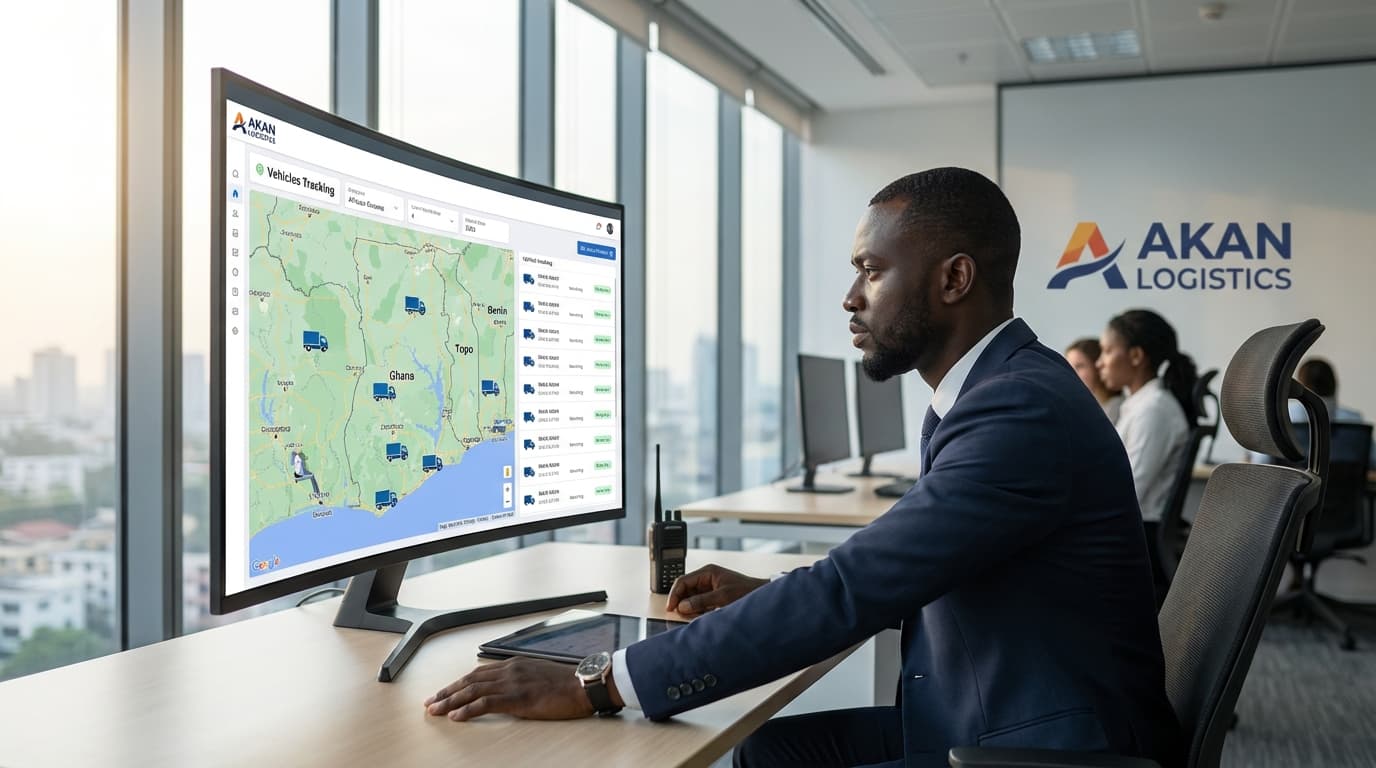
GPS tracking is the foundation of modern fleet management. Without knowing where your vehicles are and how they're being used, you're managing blind.
What GPS tracking reveals:
- Real-time location of every vehicle
- Historical trip data and routes taken
- Unauthorized vehicle use (nights, weekends, detours)
- Driver behavior (speeding, harsh braking, excessive idling)
- Accurate mileage for maintenance scheduling
Real example - Accra Water Delivery Company:
- Fleet: 8 trucks delivering water across Greater Accra
- Before GPS: GH₵42,000/month fuel costs, unknown vehicle locations
- After GPS: Discovered 2 drivers making personal trips, reduced fuel to GH₵31,000/month
- Annual savings: GH₵132,000
Implementation cost: GH₵800-1,500 per vehicle (device + first year subscription)
ROI timeline: Most businesses see positive ROI within 2-3 months
Tip 2: Establish Clear Driver Policies and Communicate Expectations
The most expensive GPS tracker is useless without clear policies that drivers understand and follow.
Essential policies for Ghana fleet operations:
Vehicle Use Policy
- Define authorized use hours (e.g., 6 AM - 8 PM weekdays)
- Specify allowed operating areas
- Clarify personal use rules (none, limited, or permitted with approval)
- Establish fuel card usage procedures
Driving Behavior Standards
- Maximum speed limits by road type (80 km/h on highways, 50 km/h in town)
- Engine idling limits (maximum 5 minutes when stationary)
- Phone use prohibition while driving
- Passenger policies
Reporting Requirements
- Daily vehicle condition checks
- Incident reporting procedures
- Fuel purchase documentation
- Customer delivery confirmation
Implementation approach:
- Document policies clearly in writing (English and local languages if needed)
- Conduct training sessions with all drivers
- Have drivers sign acknowledgment forms
- Post reminders in vehicles
- Review and reinforce quarterly
Tip 3: Monitor and Aggressively Reduce Fuel Costs
Fuel is typically 30-40% of total fleet operating costs in Ghana. Small improvements compound into significant savings.
Fuel management strategies:
Track Fuel Consumption Per Vehicle
Compare fuel efficiency across your fleet:
| Vehicle | Expected L/100km | Actual L/100km | Status |
|---|---|---|---|
| Truck A | 12.0 | 11.8 | Good |
| Truck B | 12.0 | 14.2 | Investigate |
| Truck C | 12.0 | 15.1 | Problem |
Vehicles consuming 15-20% more than expected indicate issues: driver behavior, mechanical problems, or fuel theft.
Address the Main Fuel Wasters
Excessive idling:
- Accra traffic encourages idling, but unnecessary idling at stops wastes fuel
- 1 hour of idling = 2-4 liters of fuel wasted
- Set GPS alerts for idling over 5 minutes
- Educate drivers on engine-off practices at loading points
Speeding:
- Driving at 100 km/h vs 80 km/h uses 15-20% more fuel
- Set speed alerts and review violations weekly
- Consider incentives for fuel-efficient driving
Unauthorized trips:
- Personal detours add kilometers and fuel
- GPS geofencing alerts when vehicles leave authorized areas
- Compare actual kilometers driven vs expected for each route
Implement Fuel Cards
- Eliminates cash handling and receipt fraud
- Tracks every fuel purchase by vehicle and driver
- Sets daily/weekly limits per vehicle
- Provides data for fuel efficiency analysis
Real example - Kumasi Logistics Company:
- Fleet: 15 trucks
- Fuel costs before: GH₵85,000/month
- Implemented: GPS tracking + fuel cards + driver coaching
- Fuel costs after: GH₵62,000/month
- Monthly savings: GH₵23,000 (27% reduction)
Tip 4: Optimize Routes for Efficiency and Customer Service
Poor routing wastes fuel, increases wear on vehicles, and delays deliveries. In Ghana's traffic conditions, smart routing is essential.
Routing optimization strategies:
Map Your Regular Delivery Zones
Divide service areas into logical zones:
- Zone 1: Accra Central (Circle, Kaneshie, Osu)
- Zone 2: East (Tema, Spintex, Teshie)
- Zone 3: North (Madina, Adenta, Dome)
- Zone 4: West (Kasoa, Ablekuma, Dansoman)
Assign vehicles to zones rather than criss-crossing the city.
Schedule Around Traffic Patterns
- 6:00-7:30 AM: Ideal for crossing Accra
- 7:30-9:30 AM: Avoid N1 Highway, Graphic Road, Liberation Road
- 9:30 AM-4:00 PM: Reasonable movement
- 4:00-7:00 PM: Evening rush - stay in local zone or wait it out
- 7:00 PM onwards: Clear roads, ideal for long distances
Use GPS Trip History for Route Analysis
Review completed trips to identify:
- Routes that consistently take longer than expected
- Alternative paths that save time
- Stops that could be resequenced for efficiency
Tip 5: Prioritize Preventive Maintenance
"Fix it when it breaks" is the most expensive maintenance strategy. In Ghana, where parts availability can delay repairs, preventive maintenance is crucial.
Maintenance schedule framework:
Daily Checks (by driver)
- Tire pressure and condition
- Oil level
- Coolant level
- Lights and signals
- Brake function
- Any warning lights
Every 5,000 km or Monthly
- Oil and filter change
- Tire rotation
- Brake inspection
- Battery check
- Air filter inspection
Every 20,000 km or Quarterly
- Transmission fluid
- Brake pads replacement (if needed)
- Belt and hose inspection
- Suspension check
- Complete fluid change
Use GPS Mileage Tracking for Scheduling
GPS tracking logs actual kilometers driven, enabling:
- Automatic maintenance reminders based on mileage
- Identification of vehicles approaching service intervals
- Historical maintenance cost per vehicle
Breakdown cost comparison:
| Scenario | Cost |
|---|---|
| Scheduled oil change | GH₵250-350 |
| Engine repair from oil neglect | GH₵8,000-25,000 |
| Scheduled brake service | GH₵400-800 |
| Emergency brake failure repair | GH₵2,000-5,000 + towing + lost revenue |
Tip 6: Create Driver Accountability Through Data
What gets measured gets managed. When drivers know their behavior is tracked, performance improves automatically.
Key driver metrics to track:
Safety Score Components
- Speeding incidents
- Harsh braking events
- Rapid acceleration
- Cornering forces
Efficiency Metrics
- Fuel consumption vs fleet average
- Idling time
- On-time delivery rate
- Route adherence
Implementation approach:**
Weekly Driver Scorecards:
| Metric | Driver A | Driver B | Driver C | Fleet Avg |
|---|---|---|---|---|
| Speeding events | 2 | 8 | 1 | 3.7 |
| Idling time (hrs) | 1.2 | 3.1 | 0.8 | 1.7 |
| Fuel efficiency | 11.2 | 14.5 | 10.9 | 12.2 |
| On-time delivery | 94% | 78% | 97% | 90% |
Driver B clearly needs attention. The data makes the conversation objective, not personal. For a deeper dive into managing your drivers, see our guide on fleet driver management in Ghana.
Incentive Programs
- Monthly bonus for top-performing drivers
- Recognition program (Driver of the Month)
- Tie performance to advancement opportunities
- Group incentive for team fuel savings
Tip 7: Implement a Vehicle Replacement Strategy
Keeping vehicles too long costs more than replacing them at the right time.
When to replace fleet vehicles in Ghana:
Warning Signs of End-of-Life
- Repair costs exceeding 50% of vehicle value
- Unplanned breakdowns more than once per quarter
- Fuel efficiency declining year over year
- Driver complaints about reliability
- Parts availability becoming problematic
Typical Replacement Cycles (Ghana conditions)
| Vehicle Type | Recommended Replacement | Maximum |
|---|---|---|
| Delivery motorcycles | 60,000-80,000 km or 3 years | 100,000 km |
| Light commercial vans | 150,000-200,000 km or 5 years | 250,000 km |
| Medium trucks | 300,000-400,000 km or 7 years | 500,000 km |
| Heavy trucks | 500,000-700,000 km or 10 years | 800,000 km |
Ghana-specific consideration: Factor in road conditions. A vehicle driven primarily on unpaved routes may need replacement 20-30% earlier than one on paved roads.
Tip 8: Centralize Fleet Communication
Miscommunication causes delays, wrong deliveries, and frustrated customers. A centralized system keeps everyone aligned.
Communication infrastructure:
Dispatch System
- Central visibility of all vehicle locations
- Assignment of jobs to nearest available vehicle
- Real-time communication with drivers
- Customer ETA updates based on actual location
Driver Communication Protocol
- Standardized check-in procedures
- Clear escalation path for problems
- Emergency contact procedures
- Customer service scripts
Technology options for Ghana fleets:
- GPS tracking apps with built-in messaging
- WhatsApp Business for driver groups (simple but effective)
- Two-way radio for areas with poor cellular coverage
- Dedicated fleet management platforms (for larger operations)
Tip 9: Use Data to Make Expansion Decisions
Fleet expansion should be driven by data, not gut feeling.
Key questions data can answer:
Do We Need More Vehicles?
- What's the utilization rate of current vehicles?
- How much revenue are we losing to capacity constraints?
- Are existing vehicles sitting idle during off-peak times?
Utilization benchmark:
- Under 60%: Fleet may be oversized
- 60-75%: Healthy utilization
- 75-85%: Optimal
- Over 85%: Consider expansion
Which Vehicle Type to Add?
Review your trip data:
- What percentage of trips are urban vs inter-city?
- What's the typical cargo volume per trip?
- Are you refusing jobs due to vehicle capability?
When to Expand?
Track demand patterns:
- Seasonal peaks (December, Easter, back-to-school)
- Growing customer base trends
- Route density analysis
Tip 10: Compare Manual vs GPS-Tracked Fleet Management
Here's the practical difference between traditional and modern fleet management:
| Function | Manual Management | GPS-Tracked Management |
|---|---|---|
| Vehicle location | Call driver (if they answer) | Real-time on dashboard |
| Route verification | Trust driver | Verified trip history |
| Fuel monitoring | Collect receipts | Automatic tracking + analysis |
| Driver behavior | Rely on customer complaints | Objective data |
| Maintenance timing | Calendar-based (inaccurate) | Mileage-based (accurate) |
| Theft response | Call police, hope for best | Track, immobilize, recover |
| Customer ETAs | Guess | Accurate based on location |
| Overtime verification | Trust reported hours | GPS-verified work hours |
| Monthly reports | Manual compilation | Automatic generation |
The efficiency gap is enormous. Manual management might work for 2-3 vehicles. Beyond that, you're leaving money on the table.
Frequently Asked Questions
How much can GPS tracking save on fleet fuel costs?
Most Ghana fleet operators report 15-25% fuel savings after implementing GPS tracking. Savings come from eliminating unauthorized trips, reducing idling, optimizing routes, and improving driver behavior. A 10-vehicle fleet spending GH₵50,000/month on fuel could save GH₵90,000-150,000 annually.
What's the ROI of fleet management systems for small businesses?
Typical ROI is 3-6 months for GPS tracking systems. If a system costs GH₵1,000 per vehicle per year and saves GH₵3,000-5,000 per vehicle through reduced fuel, lower maintenance, and theft prevention, the investment pays back quickly.
How do I get drivers to accept GPS tracking?
Frame it as a tool for their benefit: safety monitoring, accurate work hour records, and protection against false accusations. Involve drivers in policy development, provide training on how the system works, and implement incentive programs that reward good performance.
What features are essential for fleet GPS tracking in Ghana?
Essential features include real-time tracking, multi-network SIM coverage (MTN + Vodafone + AirtelTigo), trip history, speed and idling alerts, geofencing, and mobile app access. For larger fleets, also prioritize fuel monitoring integration and driver behavior scoring.
How many vehicles justify investing in fleet management systems?
Even 3-5 vehicles can benefit from GPS tracking if they're used for commercial operations. The per-vehicle savings typically exceed costs regardless of fleet size. However, advanced fleet management platforms with dispatch systems become more valuable at 10+ vehicles.
Can fleet tracking work in rural Ghana areas?
Yes, but with some limitations. GPS positioning works everywhere, but data transmission requires cellular coverage. Quality trackers with multi-network SIMs provide coverage in most populated areas. For very remote routes, trackers store data locally and transmit when coverage returns.
Implementation Roadmap
Month 1: Foundation
- Install GPS tracking on all vehicles
- Document current fuel consumption and costs
- Create driver policy handbook
- Conduct driver training
Month 2: Optimization
- Analyze initial data (identify worst offenders)
- Implement fuel cards
- Create maintenance schedule based on mileage
- Set up driver scorecards
Month 3: Refinement
- Optimize routes based on GPS data
- Address individual driver issues
- Implement incentive program
- Review ROI and adjust
Ongoing: Continuous Improvement
- Monthly performance reviews
- Quarterly policy updates
- Annual vehicle replacement analysis
- Continuous driver training
The Bottom Line
Fleet management isn't about watching your drivers - it's about running a more efficient, profitable business. The companies that implement these practices systematically outperform those that don't.
Start with GPS tracking (the foundation), add clear policies and driver accountability, then optimize from there. The data will guide your decisions and the savings will fund further improvements.
Your fleet can be a competitive advantage or a constant drain on profits. The choice is yours.