Your fleet is only as good as your drivers. The most advanced GPS tracking system can't compensate for drivers who speed, idle excessively, take unauthorized routes, or mishandle vehicles. Conversely, well-managed drivers can dramatically reduce fuel costs, accidents, and vehicle wear - even with basic tracking technology.
This guide covers how to implement effective driver management using GPS tracking, with practical examples from Ghana fleet operations.
Why Driver Management Matters
Before diving into how, let's look at the impact of driver behavior on your fleet:
The Cost of Poor Driver Behavior
| Behavior | Direct Cost Impact | Indirect Cost Impact |
|---|---|---|
| Speeding (>90 km/h) | 15-20% higher fuel consumption | Increased accident risk, faster tire/brake wear |
| Excessive idling | 1-2 L/hour fuel waste | Engine wear, unnecessary emissions |
| Harsh acceleration/braking | 10-15% higher fuel use | Brake wear, transmission strain |
| Unauthorized personal trips | Direct fuel theft | Vehicle unavailability, liability exposure |
| Ignoring maintenance warnings | Minor issues become major repairs | Vehicle downtime, roadside breakdowns |
Quantified example: A 10-vehicle fleet with poor driver management might waste GH₵8,000-15,000 monthly compared to the same fleet with disciplined drivers.
The Driver Behavior Improvement Opportunity
| Metric | Poor Management | Good Management | Improvement |
|---|---|---|---|
| Fuel cost per 100km | GH₵140-160 | GH₵100-120 | 25-35% savings |
| Accident rate | 1 per 50,000 km | 1 per 200,000 km | 75% fewer accidents |
| Vehicle maintenance | Reactive/emergency | Scheduled/preventive | 40% lower costs |
| Customer complaints | Frequent | Rare | Better retention |
The Driver Scorecard: Your Core Management Tool
A driver scorecard aggregates key performance metrics into a single score that makes comparison easy and identifies who needs attention.
Essential Scorecard Metrics
1. Safety Score (40% of total)
| Component | What It Measures | Weight |
|---|---|---|
| Speeding events | Times driver exceeded limit | 15% |
| Harsh braking | Sudden deceleration events | 10% |
| Harsh acceleration | Sudden acceleration events | 10% |
| Sharp cornering | Aggressive turns | 5% |
Measurement: GPS trackers with accelerometers detect these events automatically.
2. Efficiency Score (30% of total)
| Component | What It Measures | Weight |
|---|---|---|
| Fuel consumption | L/100km vs vehicle average | 15% |
| Idling time | Minutes idling per trip/day | 10% |
| Route adherence | Following optimized routes | 5% |
Measurement: GPS trip data combined with fuel sensor data (if installed).
3. Compliance Score (30% of total)
| Component | What It Measures | Weight |
|---|---|---|
| Authorized use only | No personal trips | 10% |
| Working hours adherence | Operating during authorized times | 10% |
| Pre-trip inspections | Completing daily vehicle checks | 5% |
| Documentation | Proper delivery/service records | 5% |
Measurement: GPS geofencing, time-based rules, and operational system integration.
Sample Driver Scorecard Layout
| Metric | Driver A | Driver B | Driver C | Fleet Avg |
|---|---|---|---|---|
| Safety Score | ||||
| Speeding events (per 1000km) | 2 | 12 | 1 | 5 |
| Harsh braking events | 4 | 18 | 3 | 8 |
| Harsh acceleration events | 3 | 15 | 2 | 7 |
| Safety subtotal | 92 | 58 | 95 | 82 |
| Efficiency Score | ||||
| Fuel (L/100km) | 11.2 | 14.8 | 10.9 | 12.3 |
| Idling time (min/day) | 25 | 85 | 18 | 43 |
| Route adherence | 95% | 72% | 98% | 88% |
| Efficiency subtotal | 90 | 55 | 94 | 80 |
| Compliance Score | ||||
| Authorized use | 100% | 85% | 100% | 95% |
| Hours compliance | 100% | 90% | 100% | 97% |
| Pre-trip checks | 95% | 70% | 100% | 88% |
| Compliance subtotal | 98 | 82 | 100 | 93 |
| TOTAL SCORE | 93 | 65 | 96 | 85 |
Analysis: Driver B clearly needs intervention - low scores across all categories. Drivers A and C are strong performers who should be recognized.
Implementing Driver Monitoring
Step 1: Define Clear Standards
Before you can measure performance, establish what "good" looks like:
Speed standards:
- Highway: Maximum 80 km/h
- Urban roads: Maximum 50 km/h
- Residential areas: Maximum 30 km/h
Idling standards:
- Maximum 5 minutes continuous idling
- Exception: Loading/unloading operations
Operating hours:
- Authorized hours: 6 AM - 8 PM (or per shift)
- Overnight parking: Designated locations only
Route compliance:
- Follow assigned routes within 10% tolerance
- Report and justify any deviations
Step 2: Configure GPS Tracking Alerts
Set up real-time alerts for immediate intervention:
| Alert Type | Trigger Condition | Alert Recipient |
|---|---|---|
| Speeding | >10 km/h over limit for 30+ seconds | Supervisor (app notification) |
| Extended idling | >5 minutes continuous idling | Fleet manager (daily summary) |
| Unauthorized area | Vehicle leaves geofenced service area | Immediate supervisor (SMS + app) |
| After-hours use | Ignition on outside authorized hours | Fleet manager (immediate) |
| Harsh braking | Deceleration >3.5 m/s² | Driver (in-cab buzzer if equipped) |
Step 3: Establish Review Cadence
| Review Type | Frequency | Focus | Participants |
|---|---|---|---|
| Real-time intervention | As alerts occur | Immediate safety issues | Supervisor + driver |
| Weekly scorecard review | Every Monday | Overall performance trends | Fleet manager + supervisors |
| Monthly performance discussion | First week of month | Individual driver coaching | Supervisor + each driver |
| Quarterly recognition | End of quarter | Recognize top performers | Full team meeting |
Step 4: Create Feedback Loops
For positive behavior:
- Monthly recognition for top 3 scorers
- Quarterly bonus pool for drivers exceeding targets
- Public acknowledgment in team meetings
For improvement needs:
- Private coaching sessions for underperformers
- Specific, actionable improvement plans
- Support resources (training, route optimization)
For persistent problems:
- Written warnings with clear expectations
- Probationary periods with increased monitoring
- Termination for safety violations or dishonesty
Driver Behavior Tracking: What to Monitor
Speed Monitoring
What GPS tracking captures:
- Current speed at any moment
- Speed history along entire trips
- Time spent in speed violation
- Location of speeding events
How to use the data:
- Identify habitual speeders vs occasional incidents
- Find routes where speeding is common (road design issue?)
- Correlate speeding with fuel consumption
- Document for safety discussions
Idling Detection
What GPS tracking captures:
- Ignition on with no movement
- Duration of each idling event
- Total idling time per day/trip
- Location of idling (understanding context)
How to use the data:
- Distinguish necessary idling (traffic) from waste (breaks with engine on)
- Identify loading/unloading inefficiencies
- Calculate fuel cost of excessive idling
- Target specific behaviors for change
Harsh Driving Events
What accelerometer-equipped trackers capture:
- Harsh braking events (sudden deceleration)
- Harsh acceleration events (aggressive starts)
- Sharp cornering (g-force on turns)
- Impact detection (collision events)
How to use the data:
- Flag drivers with high event frequency
- Investigate whether vehicle condition is a factor
- Provide targeted driver training
- Reduce vehicle wear and accident risk
Route Adherence
What GPS tracking captures:
- Actual path taken vs assigned route
- Unauthorized stops
- Route efficiency (actual km vs optimal km)
- Consistent deviation patterns
How to use the data:
- Identify unauthorized personal trips
- Find drivers needing route optimization training
- Adjust routes based on real-world conditions
- Ensure customer visit compliance
Real Ghana Fleet Driver Management Examples
Case Study 1: Delivery Fleet in Accra
Situation: 15-vehicle delivery fleet with high accident rate (8 incidents in 6 months) and fuel costs above budget.
Implementation:
- Installed GPS trackers with accelerometers on all vehicles
- Created driver scorecards with weekly reviews
- Implemented speeding alerts (SMS to supervisor immediately)
- Established GH₵300/month bonus for top 3 scoring drivers
Results after 6 months:
- Accidents reduced to 1 (87% improvement)
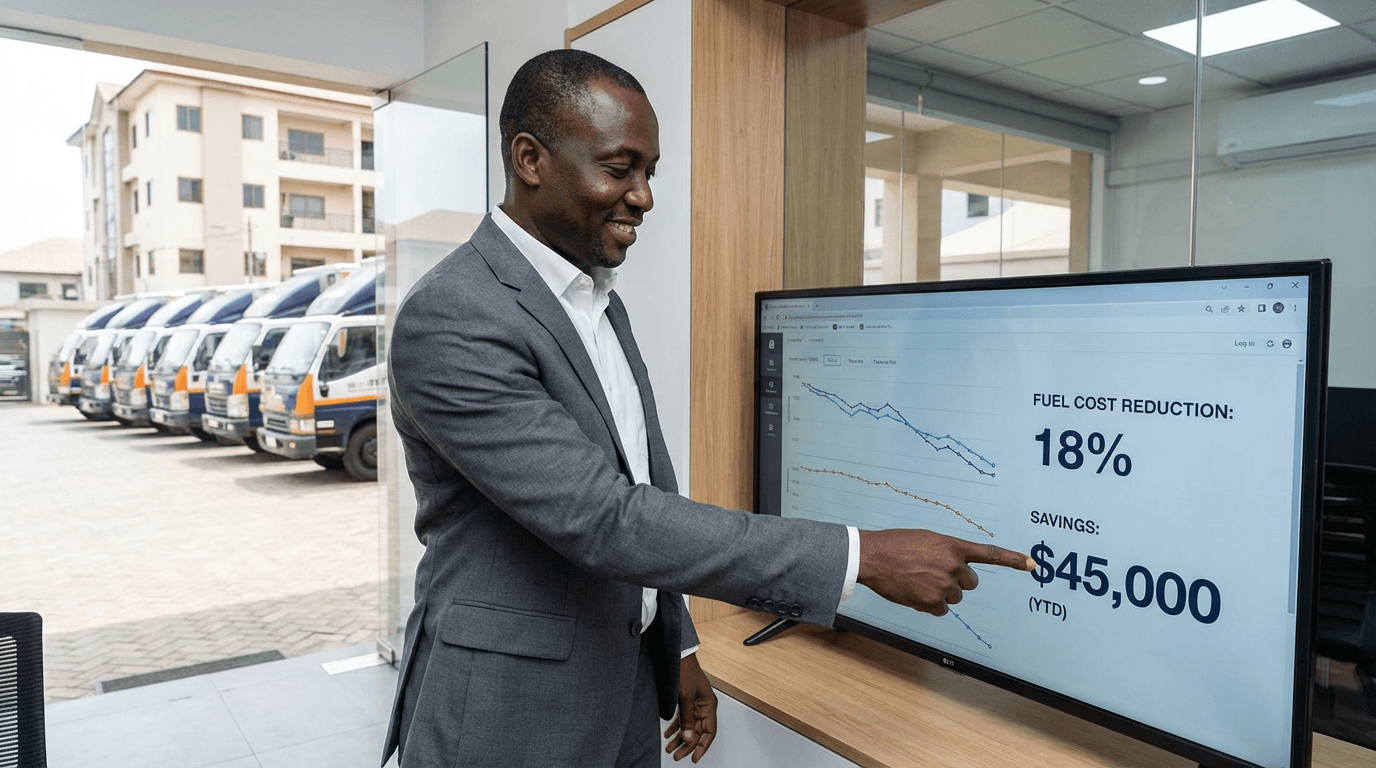
- Fuel costs down 22%
- Driver turnover reduced (top performers stayed)
- 4 underperforming drivers identified and either improved or replaced
Case Study 2: Service Vehicle Fleet in Kumasi
Situation: 8 service technicians with company vehicles. Suspected unauthorized personal use and no visibility into daily activities.
Implementation:
- GPS tracking with geofenced service areas
- After-hours movement alerts
- Daily trip summaries emailed to supervisor
- Monthly compliance scorecards
Results after 3 months:
- Unauthorized use dropped from 3-4 incidents/week to near zero
- Fuel costs decreased 18%
- Service call completion rate improved (drivers spending time on actual work)
- One driver terminated for continued policy violations after warnings
Case Study 3: Long-Haul Transport Fleet
Situation: 6 trucks running Accra-Kumasi-Tamale routes. Concerns about night driving safety and driver fatigue.
Implementation:
- GPS tracking with driving hours monitoring
- Rest stop geofences at approved locations
- Night driving speed limits (60 km/h max)
- Mandatory break alerts after 4 hours continuous driving
Results after 4 months:
- Zero accidents (vs 2 in previous 4 months)
- Driver fatigue complaints eliminated
- Delivery times actually improved (fewer stops for "recovery")
- Insurance company offered discount based on safety data
Driver Incentive Programs
Performance-Based Bonuses
Monthly driver bonus structure example:
| Scorecard Ranking | Bonus Amount |
|---|---|
| 1st place | GH₵500 |
| 2nd place | GH₵300 |
| 3rd place | GH₵150 |
| Score above 90 | GH₵100 |
| Score above 80 | GH₵50 |
Annual cost for 10-driver fleet: GH₵10,000-15,000 Potential savings from improved behavior: GH₵50,000-100,000
Team-Based Incentives
Example: Fleet fuel challenge
- Set monthly fuel target based on historical average minus 10%
- If fleet beats target, 50% of savings goes to driver bonus pool
- Pool divided based on individual efficiency scores
Why it works: Creates peer accountability and team motivation.
Recognition Programs
Non-monetary recognition that drivers value:
- "Driver of the Month" designation with certificate
- Priority vehicle assignment (best-maintained vehicle)
- Schedule preference for top performers
- Public recognition in company communications
Common Driver Management Challenges (And Solutions)
Challenge: Drivers Resent Being Monitored
Solution:
- Explain the "why" clearly (safety, fairness, job security)
- Show how data protects good drivers from false accusations
- Implement incentives so monitoring benefits drivers
- Start with coaching, not punishment
Challenge: Too Much Data, Can't Process It All
Solution:
- Focus on exception-based management (alerts only for violations)
- Use automated scorecards instead of manual data review
- Weekly reviews of summary reports, not daily details
- Set priorities: start with safety, then efficiency
Challenge: Cultural Resistance to Data-Driven Management
Solution:
- Involve drivers in setting standards
- Be transparent about how data is used
- Celebrate improvements publicly
- Apply rules consistently (no favoritism)
Challenge: Distinguishing Driver Issues from Vehicle Issues
Solution:
- Compare driver performance across different vehicles
- Compare vehicle performance across different drivers
- Factor in vehicle age and condition in evaluations
- Don't blame drivers for mechanical problems
Frequently Asked Questions
How do I implement driver scorecards in my Ghana fleet?
Start by defining clear standards for speed, idling, and authorized use. Install GPS trackers that capture the relevant data (accelerometer-equipped for harsh driving detection). Configure your tracking platform to generate automated scorecards weekly. Review with supervisors and begin driver coaching based on results.
What metrics should I track for driver performance?
Essential metrics include speeding events, harsh braking and acceleration, idling time, fuel consumption, route adherence, and compliance with operating hours. Weight these based on your priorities - safety-critical operations might weight harsh driving higher, while delivery fleets might emphasize route efficiency.
How do I get driver buy-in for GPS monitoring?
Frame it as a fairness and protection tool, not surveillance. Implement meaningful incentives for good performance. Be transparent about what's monitored and how data is used. Apply policies consistently without exceptions. Show how monitoring protects good drivers from false accusations.
What should I do with consistently underperforming drivers?
Start with data-driven coaching - show specific areas for improvement. Create a written improvement plan with clear expectations and timeline. Increase monitoring during the probationary period. If no improvement after reasonable effort, consider reassignment or termination. Document everything for HR purposes.
How often should I review driver performance data?
Real-time alerts should trigger immediate intervention for safety issues. Weekly scorecard reviews identify trends requiring attention. Monthly individual discussions provide coaching opportunities. Quarterly reviews assess overall program effectiveness and adjust standards as needed.
Can GPS tracking actually reduce accidents?
Yes. Fleet operators consistently report 50-80% accident reduction after implementing GPS-based driver monitoring. The improvement comes from reduced speeding, fewer harsh driving events, better route adherence, and the general accountability effect of knowing behavior is visible.
Building a Driver Management Culture
Technology enables driver management, but culture sustains it. Long-term success requires:
Clear Expectations
- Written policies every driver acknowledges
- Consistent enforcement without exceptions
- Standards that are challenging but achievable
Fairness
- Same rules for everyone (including supervisors)
- Recognition of genuine effort and improvement
- Consideration of circumstances (traffic, weather, vehicle issues)
Support
- Training for skill gaps
- Resources to help drivers succeed
- Open communication channels for concerns
Accountability
- Consequences for persistent poor performance
- Rewards for consistent excellence
- Data-driven decisions, not personal opinions
Conclusion
Driver management isn't about surveillance - it's about creating conditions where good drivers thrive and the business benefits from their performance. GPS tracking provides the visibility to manage objectively. Scorecards provide the framework to compare fairly. Incentives provide the motivation to improve.
For Ghana fleet operators, the choice is clear: unmanaged drivers cost you GH₵10,000+ monthly in wasted fuel, increased accidents, and vehicle wear. Managed drivers save you money, protect your assets, and represent your company professionally.
The technology is available. The question is whether you'll use it effectively.