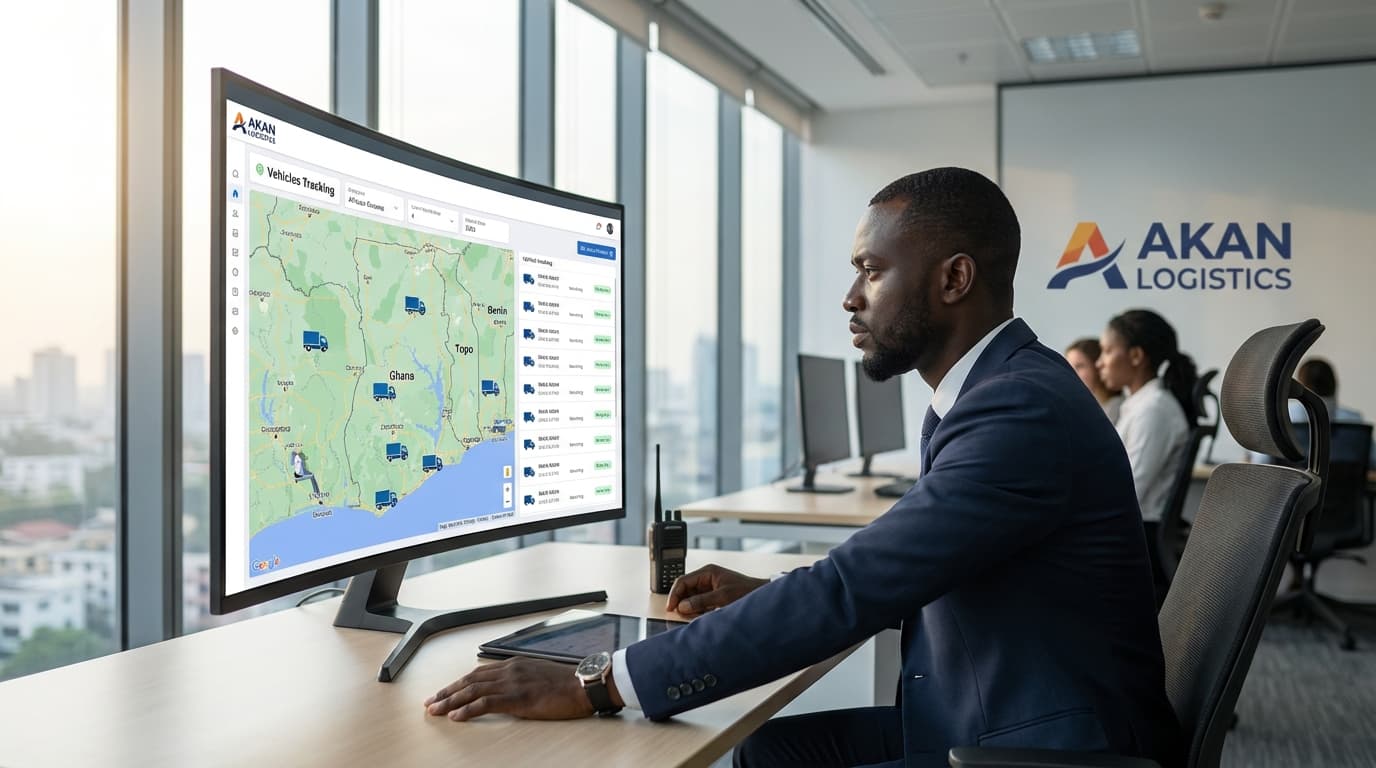
Fuel is the single largest operating expense for most Ghana fleets - typically 30-40% of total costs. For a 10-vehicle delivery fleet spending GH₵50,000 monthly on fuel, even a 15% reduction means GH₵7,500 back in your pocket every month. That's GH₵90,000 annually.
This guide shows exactly how GPS tracking enables these savings, with real examples from Ghana businesses and a calculator to estimate your potential savings.
The Hidden Fuel Costs in Unmonitored Fleets
Before GPS tracking, fleet managers operate largely blind. Here's what typically goes undetected:
Unauthorized Personal Trips
The problem: Drivers use company vehicles for personal errands, side jobs, or unauthorized transport.
Typical impact: 10-20% of fuel consumption
Real example from Accra: A food distribution company discovered through GPS tracking that one driver was making daily detours to his family's shop in Madina - adding 45 km to his route. Another was running a small side business transporting goods during "lunch breaks."
After GPS implementation: These activities stopped immediately once drivers knew trips were visible.
Inefficient Routing
The problem: Drivers take familiar routes rather than optimal routes, or make deliveries in illogical sequences.
Typical impact: 15-25% of fuel consumption
Real example from Kumasi: A water delivery fleet's drivers were choosing routes based on personal preference (avoiding "bad roads" that were actually faster). GPS trip analysis revealed a 35% variance between the shortest possible routes and actual routes taken.
Excessive Idling
The problem: Drivers leave engines running while waiting, loading, or taking breaks.
Typical impact: 5-15% of fuel consumption
Fuel consumed while idling: 1-2 liters per hour for most commercial vehicles
Real example from Tema: A logistics company found their trucks averaged 2.5 hours of idling daily. At 1.5 L/hour, that's 3.75 liters per day, per truck - GH₵52/day at GH₵14/liter, or GH₵1,300/month for just one vehicle.
Aggressive Driving Behavior
The problem: Rapid acceleration, hard braking, and speeding all increase fuel consumption significantly.
Typical impact: 10-20% of fuel consumption
Speed/fuel relationship:
- Driving at 100 km/h vs 80 km/h uses 15-20% more fuel
- Aggressive acceleration uses up to 33% more fuel than gradual acceleration
How GPS Tracking Enables Fuel Savings
GPS tracking doesn't magically reduce fuel consumption - it provides the visibility and accountability that makes reduction possible.
1. Trip Verification and Accountability
Every trip is logged with:
- Start and end locations
- Route taken (viewable on map)
- Distance traveled
- Time duration
- Stops made along the way
Impact: Drivers know unauthorized trips are visible. Personal use drops immediately.
2. Idling Detection and Alerts
GPS trackers detect when the ignition is on but the vehicle isn't moving:
- Real-time alerts after 5 minutes of idling
- Daily/weekly idling reports per driver
- Identification of habitual idlers
Impact: Drivers develop engine-off habits at loading points and during waits.
3. Speed Monitoring
Track speed continuously and set alerts for violations:
- Instant alerts when speed exceeds limit
- Speed history for each trip
- Driver scorecards comparing speed compliance
Impact: Drivers maintain fuel-efficient speeds when they know speeding is tracked. Improving driver habits is key - our fleet driver management guide covers this in detail.
4. Route Analysis and Optimization
GPS trip history enables:
- Comparison of routes for the same destination
- Identification of detours and inefficient paths
- Data for route optimization decisions
Impact: Managers can identify and eliminate wasteful routing patterns.
5. Fuel Purchase Correlation
Cross-reference fuel purchases with:
- Actual kilometers driven
- Expected consumption rates
- Historical consumption patterns
Impact: Discrepancies between fuel purchases and actual consumption become visible - indicating theft or siphoning.
Fuel Savings Calculator
Use this calculator to estimate your potential savings:
Step 1: Calculate Your Current Monthly Fuel Cost
| Input | Your Fleet | Example |
|---|---|---|
| Number of vehicles | ___ | 10 |
| Average fuel cost per vehicle/month | GH₵___ | GH₵5,000 |
| Total monthly fuel cost | GH₵___ | GH₵50,000 |
Step 2: Estimate Savings Potential
Based on typical results from Ghana fleets:
| Improvement Area | Conservative (10%) | Moderate (15%) | Aggressive (25%) |
|---|---|---|---|
| Unauthorized trip elimination | 3% | 5% | 8% |
| Route optimization | 3% | 5% | 8% |
| Idling reduction | 2% | 3% | 5% |
| Speed/driving behavior | 2% | 2% | 4% |
| Total savings potential | 10% | 15% | 25% |
Step 3: Calculate Your ROI
| Metric | Conservative | Moderate | Aggressive |
|---|---|---|---|
| Monthly fuel savings (on GH₵50,000) | GH₵5,000 | GH₵7,500 | GH₵12,500 |
| Annual fuel savings | GH₵60,000 | GH₵90,000 | GH₵150,000 |
| GPS tracking cost (10 vehicles, annual) | GH₵15,000 | GH₵15,000 | GH₵15,000 |
| Net annual benefit | GH₵45,000 | GH₵75,000 | GH₵135,000 |
| ROI | 300% | 500% | 900% |
Note: Most Ghana fleets achieve moderate savings (15%) within 3-6 months of implementation.
Real Fleet Fuel Savings Cases from Ghana
Case Study 1: Accra Water Delivery Company
Fleet: 12 water delivery trucks Initial monthly fuel spend: GH₵72,000 Problems identified:
- 2 drivers making unauthorized trips (20+ km daily each)
- Average idling of 3.2 hours per truck daily
- Suboptimal routing adding 15% to trip distances
Actions taken:
- Implemented GPS tracking with idling alerts
- Established clear vehicle use policies
- Optimized standard delivery routes
- Created driver fuel efficiency scorecards
Results after 6 months:
- Monthly fuel spend: GH₵54,000
- Savings: GH₵18,000/month (25%)
- Two underperforming drivers identified and retrained
- Delivery capacity increased 18% without adding vehicles
Case Study 2: Kumasi Logistics Fleet
Fleet: 8 medium trucks (regional distribution) Initial monthly fuel spend: GH₵64,000 Problems identified:
- Speeding on highways (averaging 95+ km/h)
- Inconsistent routing between warehouses and customers
- No visibility into actual fuel consumption per vehicle
Actions taken:
- Implemented GPS tracking with speed alerts
- Established maximum speed policy (80 km/h)
- Installed fuel sensors for consumption tracking
- Weekly driver performance reviews
Results after 4 months:
- Monthly fuel spend: GH₵52,000
- Savings: GH₵12,000/month (19%)
- Speed violations reduced 85%
- One driver discovered siphoning fuel (theft stopped)
Case Study 3: Tema Manufacturing Company
Fleet: 6 service vehicles (Accra-Tema-Kasoa coverage) Initial monthly fuel spend: GH₵18,000 Problems identified:
- Vehicles used for personal errands after work hours
- No accountability for weekend vehicle use
- Some drivers taking "scenic routes" to avoid traffic
Actions taken:
- Implemented GPS tracking with after-hours alerts
- Geofenced service area boundaries
- Required pre-approval for any trips outside normal hours
- Monthly fuel consumption reports per driver
Results after 3 months:
- Monthly fuel spend: GH₵15,300
- Savings: GH₵2,700/month (15%)
- After-hours vehicle use dropped 90%
- Driver accountability significantly improved
Implementation Guide: Getting Fuel Savings
Phase 1: Baseline Measurement (Week 1-2)
Before implementing changes, establish your baseline:
- Calculate current fuel spend: Collect 3 months of fuel receipts
- Document current routes: Note standard routes for each delivery/service area
- Record current practices: How do drivers operate today?
Phase 2: GPS Installation and Data Collection (Week 3-6)
- Install GPS trackers on all fleet vehicles
- Configure alerts: Idling (5 min), speeding (above 80 km/h), after-hours movement
- Collect data: Let the system run for 2-4 weeks without making changes
- Identify issues: Review data to find the biggest fuel wasters
Phase 3: Policy Implementation (Week 7-8)
- Communicate with drivers: Explain what's being monitored and why
- Set clear expectations: Maximum speed, idling limits, authorized use
- Establish consequences: What happens when policies are violated?
- Create incentives: Reward fuel-efficient drivers
Phase 4: Ongoing Optimization (Ongoing)
- Weekly reviews: Check fuel consumption trends per vehicle
- Monthly driver scorecards: Compare driver efficiency
- Route optimization: Use trip data to improve standard routes
- Continuous improvement: Address new issues as they appear
Driver Buy-In: Making Fuel Savings Sustainable
Fuel savings require driver cooperation. Here's how to get it:
Frame Tracking Positively
Wrong approach: "We're installing GPS to catch you wasting fuel" Right approach: "GPS helps us run more efficiently, which keeps the company healthy and protects all our jobs"
Share the Benefits
Consider fuel savings bonuses:
- Individual: Top fuel-efficient driver each month gets GH₵200 bonus
- Team: If fleet beats fuel target, everyone shares a percentage of savings
- Transparency: Share fuel cost reports so drivers see the impact of their behavior
Provide Feedback, Not Punishment
Use data for coaching, not just discipline:
- Weekly reviews highlighting what went well
- Specific suggestions for improvement
- Recognition for positive changes
Address Legitimate Concerns
Listen to driver feedback:
- "Traffic is worse on the optimal route" → Investigate and adjust
- "The idling alert goes off while stuck in traffic" → Fine-tune alert parameters
- "I need to warm up the engine in the morning" → Modern vehicles don't need extended warm-up
Advanced Fuel Optimization Techniques
Fuel Card Integration
Combine GPS tracking with fuel cards to:
- Match fuel purchases to actual driving
- Detect discrepancies (potential theft)
- Analyze cost per kilometer per driver
- Enforce approved fueling locations
Predictive Maintenance
GPS-tracked mileage enables:
- Scheduled oil changes (poor oil = poor fuel efficiency)
- Tire rotation (underinflated tires waste fuel)
- Air filter replacement (clogged filters reduce efficiency)
Load Optimization
For delivery fleets:
- Analyze weight distribution across vehicles
- Optimize load sequencing to reduce total distance
- Avoid overloading (fuel efficiency drops significantly when overloaded)
Frequently Asked Questions
How much can GPS tracking reduce fleet fuel costs in Ghana?
Most Ghana fleets achieve 15-25% fuel cost reduction within 6 months of implementing GPS tracking. Savings come from eliminating unauthorized trips (typically 10-20% of fuel use), reducing idling (5-15%), improving route efficiency (10-20%), and moderating driving behavior (10-20%).
How quickly do fuel savings appear after GPS installation?
Some savings appear immediately as drivers become aware of monitoring. However, meaningful data-driven improvements typically emerge within 4-8 weeks as you collect enough trip history to identify patterns and implement route optimizations.
Do drivers resist GPS tracking for fuel monitoring?
Initial resistance is common but manageable. Frame the tracking as a business improvement tool, not surveillance. Share fuel savings with drivers through bonus programs. Most drivers accept tracking once they understand it protects everyone's jobs.
What GPS tracking features matter most for fuel savings?
Essential features include: real-time location tracking, idling detection and alerts, speed monitoring and alerts, trip history with route replay, and driver performance reports. Fuel sensor integration provides additional data but isn't essential for initial savings.
Is the ROI on GPS tracking worth it for small fleets?
Yes. Even a 5-vehicle fleet spending GH₵25,000/month on fuel can expect GH₵3,750-6,250 monthly savings (15-25%). Annual savings of GH₵45,000-75,000 far exceeds the GH₵7,500-10,000 annual cost of GPS tracking for 5 vehicles.
How do I calculate my potential fuel savings?
Multiply your total monthly fuel cost by the expected savings percentage (15% is a reasonable estimate). Subtract the annual GPS tracking cost from annual savings to find net benefit. Most fleets see 300-900% ROI in the first year.
Conclusion
Fuel costs don't have to consume 30-40% of your fleet budget. GPS tracking gives you the visibility to identify waste and the accountability to eliminate it.
The math is straightforward:
- 15-25% fuel savings = GH₵90,000-150,000 annually for a 10-vehicle fleet
- GPS tracking cost = GH₵15,000-20,000 annually
- Net benefit = GH₵70,000-135,000+ annually
For any fleet serious about profitability, GPS tracking isn't an expense - it's an investment with clear, measurable returns.
Start by tracking your current fuel costs. Then let the data show you where the savings are hiding.