Nearly every car on Ghana's roads is a second-hand import. The Toyota Corolla sitting in traffic on the Liberation Interchange, the Hyundai Sonata parked outside a bank in Kumasi, the Ford Ranger at a construction site in Tema - almost all of them were bought used, cleared through Tema Port, and registered with DVLA.
That is Ghana's car market: over 90% of vehicles are imported as used cars. And that reality creates a specific problem that GPS tracker sellers rarely talk about honestly.
Used cars in Ghana need GPS tracking more than new cars. Not the same amount. More.
This guide explains why - and exactly what to check, what to buy, and what to expect when installing a GPS tracker in a second-hand vehicle in Ghana.
Why Second-Hand Cars in Ghana Are Higher Risk
When you buy a new car from a dealer, you typically get some form of factory security system. Immobilizers, alarm systems, and in some markets, factory-installed tracking. Used imports arriving in Ghana come with none of that guarantee.
Here is what you are actually buying when you clear a second-hand car at Tema Port:
Unknown security history. You do not know how many previous owners the car had, where it was driven, or whether it was ever stolen and recovered. A car with a "clean" history in Japan or the UK may still have been an insurance write-off that was repaired and exported.
No factory immobilizer (on older models). Most Japanese and American used cars arriving in Ghana are 2008-2018 models. Many of these, especially the high-theft Toyota Corolla and Camry variants, have factory immobilizers that can be bypassed by experienced thieves in under 10 minutes.
Abossey Okai access. Ghana's largest second-hand auto parts market means replacement keys, spare ECUs, and cloned transponders are available to anyone willing to pay. A determined car thief in Accra has access to bypass tools that simply do not exist in most other markets.
No return address. When your new car is stolen in Europe or the US, the manufacturer can sometimes assist with recovery. When your Nissan Sentra disappears from your compound in Spintex, there is no manufacturer database to query. Without your own GPS tracker, you have nothing.
The Ghana Police Service recovered fewer than 30% of reported stolen vehicles in 2024 without tracking assistance. With GPS tracker data, that recovery rate exceeds 85%. The difference is entirely down to whether the owner can provide a real-time location within the first hour.
What to Check Before Installing a GPS Tracker in a Used Car
Not all second-hand cars are the same. Before you book an installation, do these checks - they will determine which tracker type works best and where it should be hidden.
1. Check the OBD-II Port
All vehicles manufactured after 1996 have an OBD-II diagnostic port, usually located under the dashboard on the driver's side. Some GPS trackers plug directly into this port - convenient, but not recommended for security.
Why OBD-II-only trackers are risky on used cars: The OBD-II port is the first place a car thief checks. A plug-in OBD tracker can be removed in 3 seconds. Worse, on older used cars where the dashboard trim is already loose or worn, the port may be completely exposed and obvious.
For second-hand cars in Ghana, we recommend hardwired GPS trackers that draw power directly from the vehicle's fuse box. This allows hidden installation in locations that require significant disassembly to access - meaning a thief cannot remove the tracker without specialized knowledge of your specific vehicle.
2. Check the Electrical System
Used cars imported into Ghana sometimes have modified or repaired electrical systems - especially vehicles that were in minor accidents before export. Before installation, your technician should check:
- Battery voltage: A weak or unstable battery can cause GPS tracker disconnections, generating false alerts
- Fuse box condition: Corroded or replaced fuses can affect tracker power stability
- Existing alarm wiring: Some cars have had aftermarket alarms installed and removed, leaving orphaned wiring that can interfere
A good installer will check these before committing to a specific installation point. AcesTrack's technicians do this as standard on every installation in Accra, Tema, Kumasi, and Takoradi.
3. Identify the Model Year and Trim Level
This matters because it affects where the tracker can be hidden. A 2010 Toyota Corolla has more interior cavity space than a 2018 Toyota Camry with a packed infotainment stack. Your installer needs to know the exact model, trim, and year to identify the best concealment point.
Toyota Corolla (2003-2013), Toyota Camry (2006-2011), and Honda Accord (2003-2007) are the most common used imports from Japan and the US in Ghana - and AcesTrack technicians have installed in all of these hundreds of times. Installation on these models is typically completed within 2 hours.
4. Confirm DVLA Registration Is Complete
This is not a tracker issue - it is a legal issue. If your vehicle is not yet registered with DVLA, you do not have a legal plate number. GPS tracking records are admissible as evidence in Ghana courts, but they are more useful when tied to a registered vehicle with a clear ownership chain.
Complete your DVLA registration before or immediately after GPS installation. If your clearing agent is still processing paperwork, you can still install the tracker - the device does not require registration data to function.
Which GPS Tracker Plan Is Right for a Second-Hand Car?
For a single personal vehicle - your daily driver, whether it is a Toyota Camry picked up at Kantamanto for GH₵35,000 or a Ford Explorer cleared through Tema for GH₵95,000 - the right plan is straightforward.
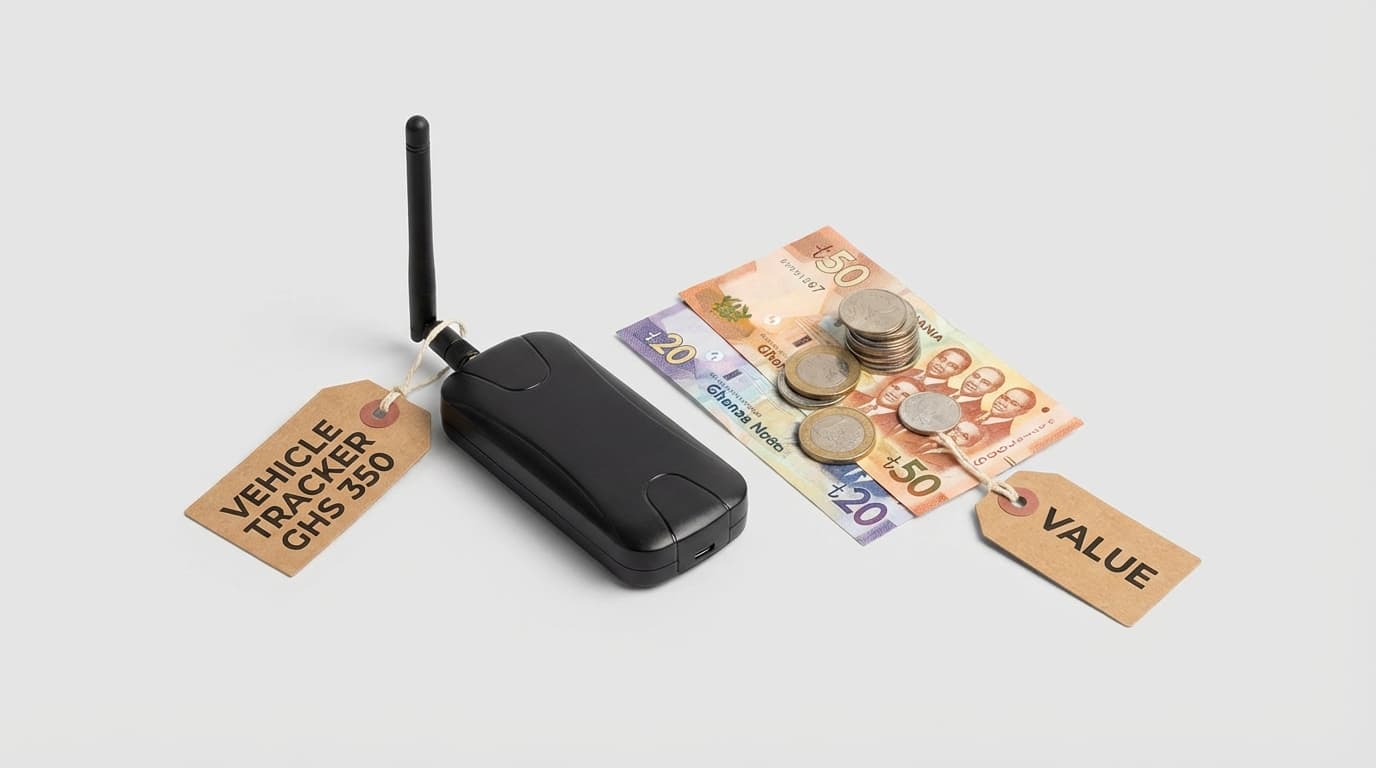
AcesTrack Basic (GH₵999 one-time, no monthly fee) covers what matters most:
- Real-time location tracking (30-second updates)
- Movement alerts - if your car moves when parked, you get a WhatsApp notification
- Geofencing - set a zone around your house or office; any breach triggers an alert
- Remote engine immobilization - if your car is stolen, you can disable the engine remotely
- Trip history - 90 days of route history, useful for disputes or insurance claims
- No monthly subscription required
For most second-hand car owners in Ghana, this is the right choice. You pay once, install once, and your car is tracked permanently. If you want 24/7 human monitoring - someone watching your car and calling you if it moves at 3am - you can add a monitoring plan at GH₵250/month.
See the full plan comparison on our pricing page.
How Installation Works on Older Models
The installation process for a second-hand car in Ghana typically takes 1.5 to 3 hours, depending on the model and how concealed you want the device.
Step 1: Vehicle inspection (15 minutes). The technician checks the electrical system, identifies the best installation point based on your vehicle's model and trim, and confirms the OBD-II port location.
Step 2: Device installation (60-120 minutes). The tracker is hardwired to a constant power source and a switched power source (ignition). For older Japanese imports, this is typically done via a tap in the fuse box or directly at the vehicle's wiring harness. The device is then hidden in a location specific to your model.
Step 3: Activation and testing (15 minutes). The technician confirms the device is online, tests movement alerts and geofencing, and walks you through the AcesTrack app setup on your phone.
Step 4: Tamper seal. A tamper-evident seal is placed over the access point. If anyone accesses the tracker location, you will know.
AcesTrack offers installation at our service centers in Accra (East Legon), Tema (Community 25), and Kumasi (Adum). Mobile installation - where a technician comes to you - is available in greater Accra for an additional fee.
Book your installation appointment here.
A Real Story: Toyota Corolla Recovered in Kasoa
In August 2025, a customer who had recently purchased a 2009 Toyota Corolla from a dealer in Abossey Okai installed AcesTrack Basic three weeks after taking delivery. The installation cost GH₵999.
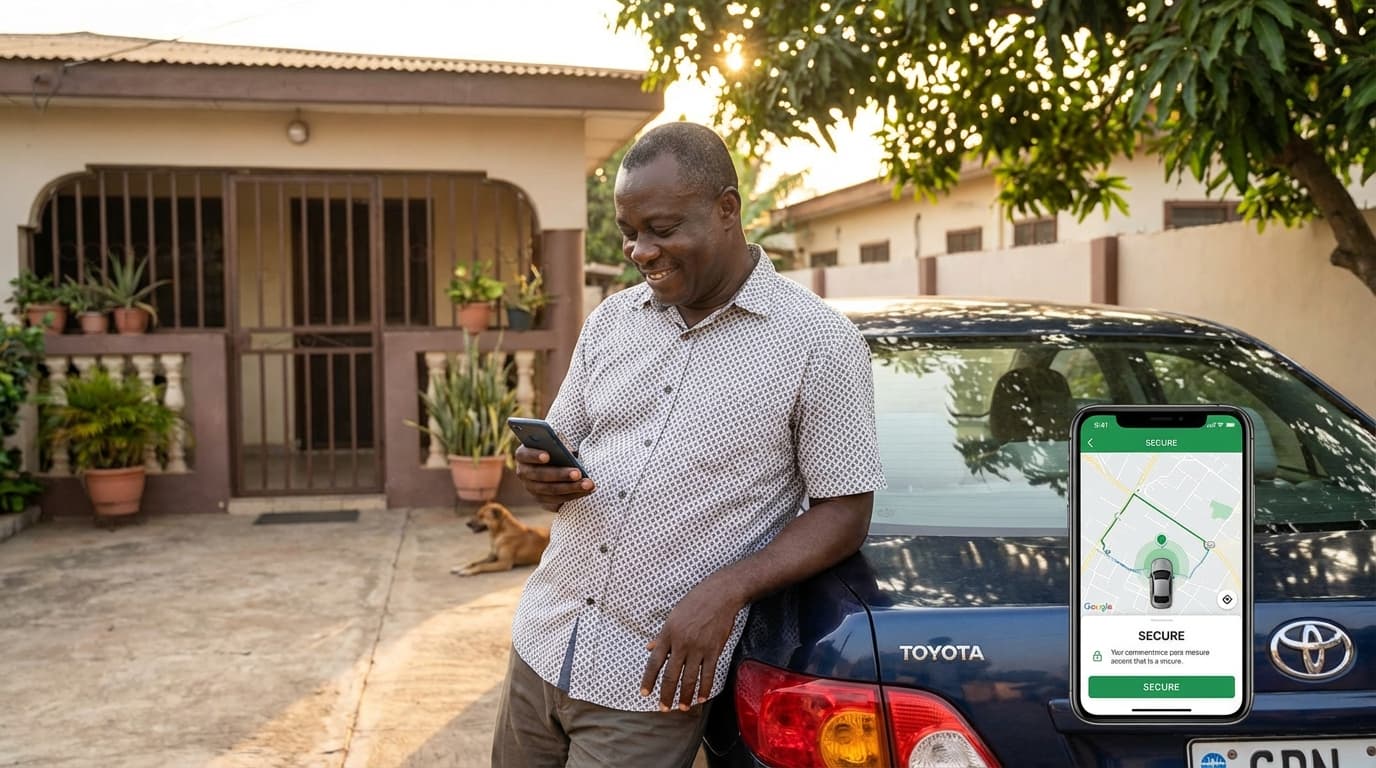
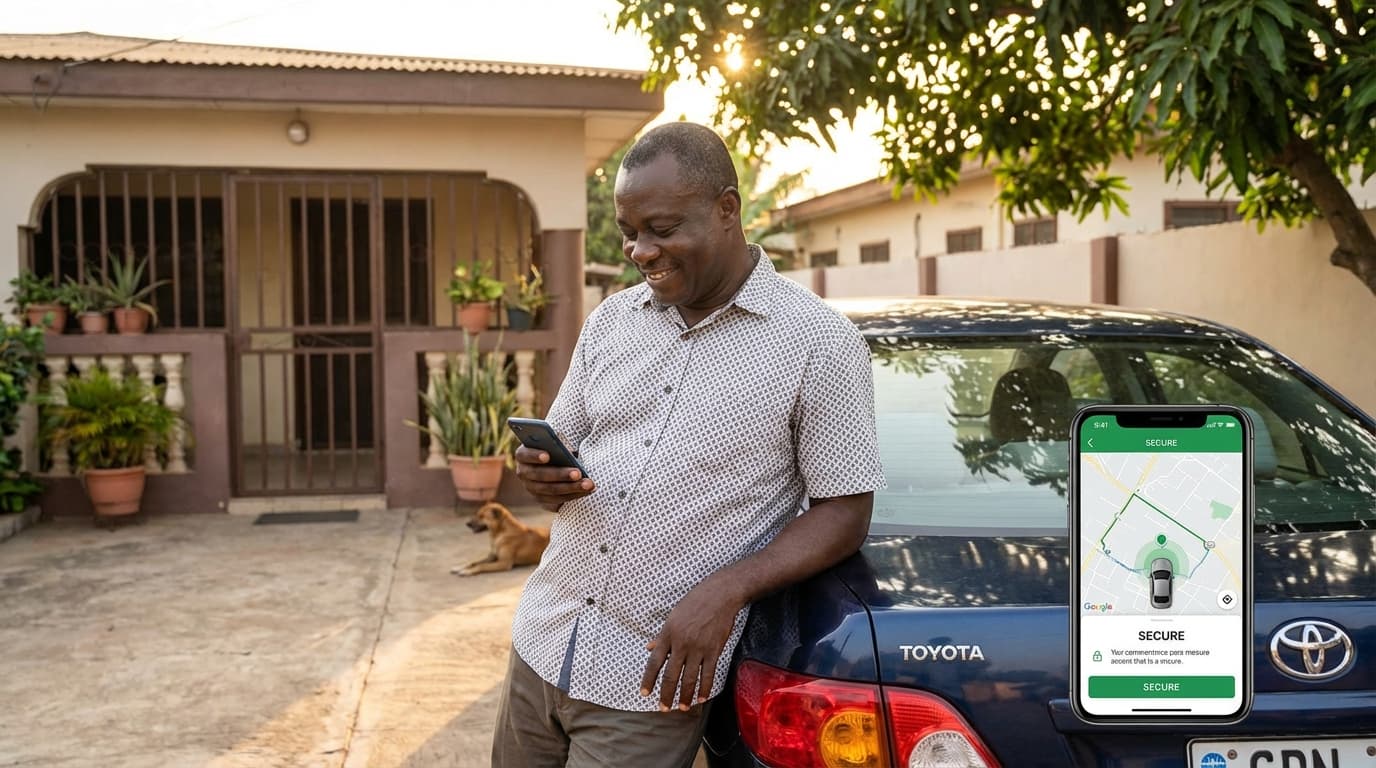
Six weeks later, the car was stolen from outside a church in Dansoman on a Sunday morning. The customer received a movement alert on his phone at 11:47am - while he was still inside the service. He logged into the AcesTrack app, saw the car moving west on the N1 toward Kasoa, and called AcesTrack's emergency line.
AcesTrack's monitoring team tracked the vehicle in real time and coordinated with Ghana Police Service. The car was intercepted at a checkpoint near Kasoa and recovered intact within 2 hours. The remote engine immobilization feature was activated when the car stopped briefly, preventing further movement.
The customer's total cost: GH₵999 for the tracker. The car's value: GH₵38,000.
The Question Every Used Car Buyer Should Ask
When you are negotiating the price of a second-hand car at Abossey Okai, you are focused on the market price, the condition, the mileage. What most buyers do not factor in is the cost of theft.
At AcesTrack, we have tracked recovery data across hundreds of stolen vehicle cases in Ghana. The pattern is consistent: vehicles without GPS trackers have a less than 30% recovery rate. Vehicles with active GPS trackers have an over 85% recovery rate.
For a car you paid GH₵40,000 to GH₵120,000 for, the cost of not tracking it is not GH₵999. The cost of not tracking it is the entire vehicle value, minus whatever the police manage to recover - which, in most cases in Ghana, is nothing.
Install the tracker when you install the plates. It is the cheapest additional insurance you will ever buy for your second-hand car.
See personal car tracking plans or book a free consultation to get started today.