Generator GPS tracking in Ghana is not a topic you see discussed much - until someone loses a generator. Then it becomes the only thing they wish they had set up.
Ghana's ongoing power challenges mean generators are everywhere: in homes in East Legon and Trasacco, on construction sites in Tema and Spintex, at commercial properties across the Accra CBD, in mining camps in the Ashanti Region. They are expensive, essential, and - without GPS tracking - almost impossible to recover once stolen.
This guide explains how generator GPS tracking works, what to look for in a tracker, and why the ROI on a GH₵999 GPS device protecting a GH₵80,000 generator is one of the most straightforward calculations in asset protection.
The Generator Theft Problem in Ghana
Generator theft in Ghana is systematic, not opportunistic. Organized groups target generators specifically because:
- They are high-value and liquid. A 10KVA diesel generator worth GH₵25,000 can be sold in parts across Kumasi's Suame Magazine or Accra's Kokompe market within 48 hours.
- They are often left unattended. Construction sites run generators 24 hours but security is typically minimal at night. Residential generators are unmonitored between power cuts.
- Recovery is nearly impossible without GPS. Unlike vehicles, generators have no registration system. Once stolen, there is almost no official mechanism to trace them.
- They are mobile enough to move quickly. A small commercial generator can be loaded onto a pickup in under 3 minutes. A large 30KVA unit can be moved with a fork-lift and a flatbed in under 10 minutes.
The replacement cost you are protecting is significant:
| Generator Type | Replacement Cost (GH₵) |
|---|---|
| 3KVA home standby | 5,000-12,000 |
| 10KVA commercial | 20,000-45,000 |
| 30KVA construction site | 60,000-120,000 |
| 100KVA industrial | 180,000-400,000 |
At these values, a GH₵999 GPS tracker is not a cost - it is a basic risk management decision.
How GPS Tracking Works on a Generator
Unlike vehicles, generators do not have a 12V ignition system that a standard OBD tracker plugs into. Generator GPS installation requires a slightly different approach - but it is straightforward for an experienced technician.
Power Source Options
Battery-powered tracker: A self-contained GPS device with its own rechargeable battery. No wiring required. Lasts 7-30 days per charge depending on the device and reporting frequency. Best for generators that move between sites regularly, since installation takes under 5 minutes.
Hardwired to generator power: The GPS tracker is wired into the generator's 12V DC output or a separate battery. This provides continuous power and eliminates the need to recharge the tracking battery. Best for generators in fixed or semi-fixed locations.
Hybrid (main power + backup battery): The tracker draws from the generator's power when running and switches to internal backup battery when the generator is off. This is the recommended option for construction site generators - the backup battery keeps the tracker alive and reporting even when the generator is powered down.
Mounting
GPS trackers for generators should be mounted in concealed locations:
- Inside the generator housing near the control panel (away from heat sources)
- Underneath the generator chassis, attached with industrial-grade magnetic mounts or metal straps
- Inside the fuel tank access panel (on larger commercial units)
The goal is a concealed position that maintains GPS signal but is not visible during a casual inspection - or a fast theft attempt.
Key Features for Generator GPS Tracking
Not every GPS tracker is suitable for generator protection. Here is what matters specifically:
Movement/Vibration Alerts
This is the most critical feature. When someone lifts, moves, or loads your generator, the GPS tracker should immediately send you a WhatsApp or SMS alert. You do not need to check an app - the alert comes to you.
AcesTrack movement alerts fire within 30 seconds of vibration or displacement. On a construction site in Spintex at 2am, a 30-second alert can be the difference between catching a theft in progress and finding an empty pad in the morning.
Geofencing
Set a virtual boundary around the generator's permitted location - the construction site perimeter, your compound, or your business premises. If the generator moves outside the boundary, you receive an instant alert.
For generators that legitimately move between sites (rental generators, project-based construction equipment), geofencing allows you to track whether the unit has been delivered to the right location and alert you if it leaves unexpectedly.
Live Location Tracking
Once an alert fires, you need to see exactly where the generator is - and track its movement in real time. Live GPS tracking updates every 10-30 seconds, giving you and any responding security personnel a constantly updating location to follow.
In several AcesTrack recoveries involving equipment theft in the Accra-Kumasi corridor, live location updates allowed vehicle owners and police to intercept stolen assets while still in transit. The same applies to generator theft.
Tamper Alerts
If someone attempts to remove the GPS tracker itself - or cuts the power supply to it - you receive an immediate alert. A good tracker also has a backup battery that maintains operation for several hours even if external power is cut.
Network Coverage
Your generator may operate in Tema, on a construction site outside Kasoa, at a mining camp near Obuasi, or at a farm in the Brong-Ahafo region. Ensure the tracker uses a Ghana network SIM (MTN or Vodafone) rather than a foreign network that will lose signal outside major cities.
ROI: GPS Tracker vs. Generator Replacement
The financial case for generator GPS tracking in Ghana is simple.
A 10KVA commercial generator costs GH₵25,000-GH₵45,000 to replace. An AcesTrack GPS tracker costs GH₵999 one-time plus GH₵250/month.
Year 1 protection cost: GH₵999 + (GH₵250 × 12) = GH₵3,999 Generator replacement cost if stolen: GH₵25,000-GH₵45,000
You are spending GH₵3,999 per year to protect an asset worth 6-11 times that amount. Even if the tracker only delays or deters a theft once in its lifetime, it has paid for itself many times over.
For operators with multiple generators - construction companies managing 5-10 units across different sites - the calculation becomes even clearer:
| Fleet | Annual GPS Cost | Generator Value Protected |
|---|---|---|
| 3 generators | GH₵11,997 | GH₵75,000-GH₵135,000 |
| 5 generators | GH₵19,995 | GH₵125,000-GH₵225,000 |
| 10 generators | GH₵39,990 | GH₵250,000-GH₵450,000 |
Generator Types That Need GPS Tracking
Home Standby Generators (3-7KVA)
Home generators in Accra and Kumasi are stolen regularly from unsecured compounds. They are small enough to be carried by two people, valuable enough to sell quickly, and often left unguarded during the day when households are empty. A GPS tracker with a movement alert is the most cost-effective security measure available.
Commercial/Office Generators (10-50KVA)
Office generators in the Accra CBD, Airport area, and commercial zones in Kumasi are high-value targets. They are typically located in dedicated generator rooms or enclosures - but enclosures are often inadequate security against a determined theft. GPS tracking provides a layer of protection that physical security alone cannot.
Construction Site Generators (15-100KVA)
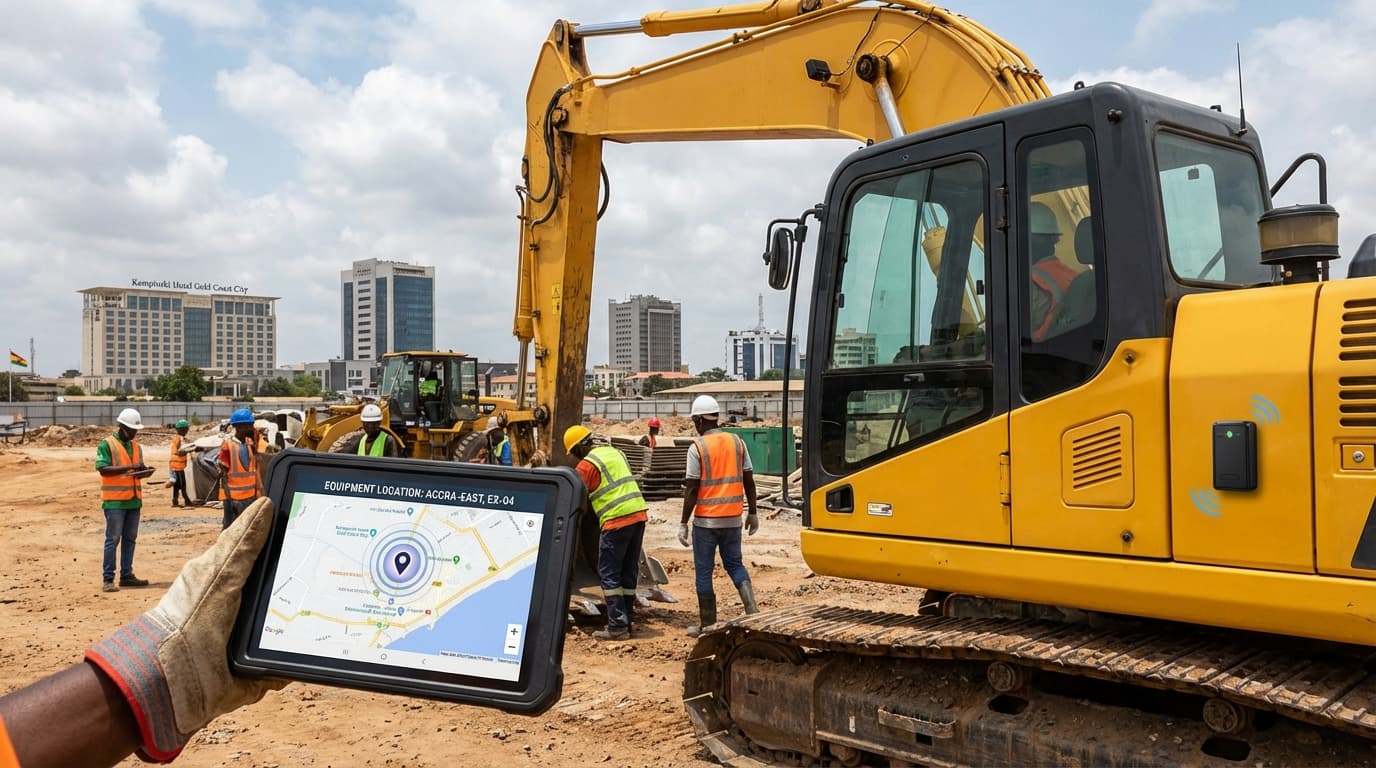
This is where GPS tracking pays off most clearly. Construction sites in Tema, Spintex, Achimota, and across the Greater Accra Region regularly experience equipment theft, and generators are among the most targeted items. Site security is often basic, and generators are frequently left running overnight with minimal supervision. GPS tracking with movement alerts and geofencing provides monitoring that human security alone cannot guarantee.
Rental Generator Fleets
Companies renting generators across Ghana - for events, construction projects, and emergency power - face a specific challenge: they need to know where every unit is at all times. GPS tracking provides a real-time fleet map of all generator locations, alerts for unauthorized movement, and documentation of delivery and collection times.
Mining and Industrial Generators
Generators at mining operations near Obuasi, Tarkwa, and across the Western Region represent some of the highest-value units in Ghana - some worth GH₵300,000-GH₵400,000. GPS tracking is standard practice internationally for assets of this value and should be treated as non-negotiable for Ghana operations.
Installation: What to Expect
An AcesTrack generator installation typically takes 30-90 minutes depending on the generator type and mounting approach. Our technical team covers Accra, Tema, Kumasi, and Takoradi, with installations available at your site.
The process:
- Site assessment: Technician identifies the best concealed mounting location
- Tracker mounting: Device secured with industrial mounts (magnetic or bolt-fixed)
- Power connection: Wired to generator DC output or fitted with standalone battery
- Testing: Movement alert and live tracking confirmed before the technician leaves
- App setup: Fleet dashboard configured with your generator's location and geofence boundary
Frequently Asked Questions
Will a GPS tracker survive generator vibration?
Yes. AcesTrack trackers are rated for high-vibration environments and are used on construction equipment, agricultural machinery, and generators throughout Ghana. Industrial mounting hardware is included.
What happens when the generator is moved to a different site legitimately?
You receive the movement alert, confirm the move is authorized, and update the geofence to the new location. This takes about 60 seconds in the AcesTrack app. Future unauthorized movements will trigger a new alert.
Can the tracker be spotted by thieves?
Our installation protocol prioritizes concealed mounting. The tracker is not visible during a casual external inspection. Thieves generally do not know it is there - which is the point.
What if the generator is in an area with poor network coverage?
The tracker stores location data locally and syncs when coverage returns. Movement alerts may be delayed in very remote areas, but the location history will be complete when connectivity is restored.
Can I track multiple generators on one account?
Yes. The AcesTrack fleet dashboard supports unlimited assets. Construction companies and generator rental businesses can monitor all units from a single app.
Start Protecting Your Generator
Generator theft in Ghana is not going away - if anything, it is increasing as generator values rise and formal recovery mechanisms remain limited. GPS tracking is the most reliable protection available at a cost that makes sense against any commercial generator's replacement value.
Explore our construction and equipment tracking page for full feature details, or book an installation to get a GPS tracker on your generator within 48 hours.