GPS tracking for construction equipment in Ghana addresses a problem that is costing the industry hundreds of millions of cedis annually: equipment you cannot see, cannot account for, and cannot protect.
An excavator in Ghana costs GH₵600,000-GH₵2,000,000. A bulldozer runs GH₵800,000-GH₵1,500,000. A tower crane can exceed GH₵3,000,000. These are not small assets to manage with a logbook and a site foreman's phone calls.
This guide covers everything a Ghanaian construction company needs to know about GPS tracking for heavy equipment - from equipment types and use cases, to specific implementations in Accra, Kumasi, Obuasi, and Tarkwa.
Why Construction Equipment Tracking Is Different from Vehicle Tracking
Standard vehicle GPS trackers work for cars and trucks. Construction equipment tracking has unique requirements:
No 12V power system: Many machines run on 24V or higher. Trackers need to handle variable voltage across bulldozers, graders, and excavators.
Remote and rural sites: Construction happens in areas with limited mobile network coverage. Kumasi-Asante Akyem roads, Obuasi mine access routes, coastal reclamation projects in Tema - tracking must work where coverage is inconsistent.
Equipment moves slowly but unpredictably: A vehicle crosses 50km in 40 minutes. An excavator might be moved on a flatbed at night. Alerts need to trigger on any unauthorized movement, not just speeding.
Utilization matters, not just location: You need to know not just where the equipment is, but whether the engine is running, for how many hours, and whether it is actually doing productive work.
Multiple assets, multiple sites: A construction company in Accra might have equipment on 5 sites simultaneously - Road contract in Kasoa, building project in East Legon, government infrastructure in Tema, and rented equipment at two other sites.
Construction Equipment Types That Need GPS Tracking in Ghana
Earthmoving Equipment
Excavators (GH₵600K-GH₵2M)
- High theft risk when moved off-site for "repairs"
- Track engine hours for accurate maintenance scheduling
- Confirm site arrival for subcontractor billing
Bulldozers / Crawlers (GH₵800K-GH₵1.5M)
- Theft via flatbed is the primary risk
- Movement alerts are critical - any movement off-site triggers an alert
- Utilization tracking shows whether you are billing correctly for rental
Graders / Road graders (GH₵500K-GH₵1.2M)
- Frequently used on government road contracts across Ghana
- Accountability for hours worked (government billing)
- Misappropriation risk when equipment is on remote road sites in Northern or Western Regions
Compactors and rollers (GH₵200K-GH₵600K)
- Smaller but numerous - often tracked in groups
- Night-time removal risk on government road sites far from urban centers
Lifting Equipment
Tower cranes (GH₵2M-GH₵5M+)
- Less theft risk (cannot move quickly), more about utilization and maintenance
- Track lift cycles and engine hours for compliance
- Remote monitoring for safety compliance
Mobile cranes / Hydraulic cranes (GH₵1.5M-GH₵4M)
- High theft risk when moved at night
- Rental billing verification (hours used vs. hours billed)
- Fuel consumption monitoring
Forklifts (GH₵80K-GH₵300K)
- Common in warehouses and construction material yards in Tema Industrial Area
- Shift-based utilization monitoring
- Impact detection for damage prevention
Material Handling and Site Equipment
Concrete mixers (GH₵150K-GH₵500K)
- Trip verification for batch plant to site deliveries
- Driver behavior on public roads
- Unauthorized use after hours
Dump trucks / Tippers (GH₵300K-GH₵800K)
- High theft risk and unauthorized use risk
- Trip verification for quarry to site loads
- Speeding on mining access roads (safety compliance)
Generator sets (GH₵50K-GH₵400K)
- Theft of generators is extremely common at night in Ghana
- Movement alerts on any transportation
- Fuel consumption monitoring (generator fuel theft is widespread)
The Four Core Problems GPS Solves for Ghana Construction
1. Equipment Theft
Construction equipment theft in Ghana follows predictable patterns:
-
Night-time flatbed removal: Thieves arrive at 1-3am with a low-loader truck. Equipment is loaded and driven to a remote location - often a mine site in Western Region or Brong-Ahafo where it is difficult to trace.
-
"Repair" diversion: A driver takes equipment for "maintenance" and it disappears. The workshop does not exist. By the time you discover the deception, the machine is in Ivory Coast.
-
Site staff complicity: Especially on remote road contracts, site foremen and security can be bribed to allow night-time access.
GPS solution: Movement alerts are triggered the moment equipment is loaded onto a flatbed. You receive an immediate notification and can alert police before the equipment leaves the region. AcesTrack customers have recovered excavators that had already crossed the border into Togo - using GPS coordinates to coordinate with authorities.
2. Utilization Gaps
You are paying for a GH₵1.2M excavator to sit 40% of the time. You don't know it because site reports say it's "in use."
GPS and engine hour tracking reveals:
- Actual engine hours per day vs. reported hours
- Idle time vs. productive time (engine running but not moving)
- Days the machine was on-site but not operating
- Whether rental equipment was used for the billed hours
One Accra construction company discovered through GPS tracking that a rented excavator they were billing a client 10 hours/day for was actually averaging 6.2 hours of engine runtime - costing them credibility and their client extra money for nothing.
3. Fuel Theft at Remote Sites
Diesel is expensive. A large excavator burns 15-20 liters per hour. An active site using 10 pieces of equipment can consume 1,500-2,000 liters of diesel per day.
Without monitoring, fuel theft at remote sites can run 10-20% of total consumption. Common methods:
- Siphoning from tanks overnight
- Falsifying fuel delivery receipts
- Running equipment during paid overtime hours for personal projects
GPS tracking with fuel sensors detects sudden fuel level drops that do not correlate with engine run time - the signature of siphoning.
4. Maintenance and Equipment Longevity
Construction equipment in Ghana is frequently run past service intervals because nobody is tracking engine hours accurately. Result: catastrophic failures at the worst possible moment, during a government contract deadline or peak project phase.
GPS-based engine hour tracking enables:
- Automatic service alerts at every 250, 500, and 1,000 engine hours
- Maintenance history tied to specific machines (not just "the big yellow one")
- Predictive alerts before scheduled service dates
- Documentation for warranty claims and resale value
A well-maintained excavator with full service records sells for 15-20% more than an equivalent machine with no documentation.
GPS Tracking on Active Construction Sites in Ghana
Accra Sites
High-rise construction in Airport Residential, East Legon, Cantonments, and the CBD is intensely competitive. Equipment is often shared across multiple sites within the city. GPS tracking shows you which site each machine is on, when it moved, and who authorized the transfer.
For road contracts in Accra (Spintex, N1, Tema Motorway upgrades), equipment moves between active sections frequently. Tracking prevents equipment from being "borrowed" by site foremen at adjacent sections who need extra machines.
Kumasi Sites
Kumasi's construction boom around KNUST, Nhyiaeso, and the airport expansion has brought more equipment to the Ashanti Region. Equipment stationed in Kumasi for large projects is particularly vulnerable to night-time theft - it can reach Ivory Coast border in 4-5 hours.
The Kumasi-Accra road corridor is a known route for stolen equipment. GPS tracking with geofencing means you get an alert the moment equipment leaves the Kumasi area.
Obuasi and Tarkwa: Mining-Adjacent Construction
Construction supporting Obuasi mine operations and the Tarkwa gold mining corridor is some of the most valuable and most remote in Ghana. Equipment operates far from urban centers, overnight security is thin, and equipment theft here often involves organized groups with flatbeds and inside information.
GPS tracking for construction equipment in these areas must work with limited coverage - satellite backup options or devices that queue alerts and deliver when coverage returns are essential.
For mining-related equipment, read our detailed guide on GPS tracking for mining equipment.
Northern Ghana: Road Contracts and Infrastructure
Infrastructure contracts in the Northern, Savannah, and Upper Regions take equipment far from major network hubs. Equipment can be on site for months with minimal management oversight.
Remote tracking with weekly utilization reports gives Accra-based project managers visibility into what is actually happening on sites in Tamale, Bolgatanga, or Wa - without needing to travel.
Implementation: How to Deploy GPS Tracking on Construction Equipment
Step 1: Asset Inventory and Prioritization
Start with a complete inventory of all equipment. Rank by value and theft risk:
Priority 1 (deploy immediately): Excavators, bulldozers, graders, mobile cranes - any equipment worth GH₵500K+ that is regularly moved between sites.
Priority 2 (within 30 days): Smaller earthmoving equipment, concrete mixers, dump trucks, generators.
Priority 3 (within 90 days): Workshop equipment, power tools, pumps, smaller generators.
Step 2: Device Selection
For construction equipment, the standard vehicle tracker is insufficient. You need:
- Heavy-duty power input: 9-100V input range to handle 12V, 24V, and 36V systems
- Waterproof and dustproof: IP67 rating minimum for construction site conditions
- Backup battery: 24+ hours in case of power disconnection
- Engine hour counter: Tracks actual operating time for maintenance and billing
- Vibration and tilt sensors: Detects when equipment is being loaded onto a flatbed
- Fuel sensor compatibility: External fuel sensor input for consumption monitoring
Step 3: Installation on Heavy Equipment
Installation on construction equipment is more complex than on vehicles. The tracker needs to:
- Connect to the equipment's power supply (with appropriate voltage regulation)
- Be concealed from operators - hidden in the equipment chassis, not obvious
- Have the antenna positioned for optimal network coverage
- Be connected to ignition signal to detect engine on/off accurately
AcesTrack recommends professional installation for all heavy equipment. Incorrect installation can cause electrical issues with expensive machinery. Our technical team in Accra, Kumasi, and Tema can deploy to your sites.
Step 4: Configure Alerts
For construction equipment, set up these critical alerts:
| Alert | Trigger | Response |
|---|---|---|
| Movement alert | Any movement outside working hours (6pm-6am) | Call site security, check live location |
| Geofence exit | Equipment leaves site boundary | Verify with site manager before escalating |
| Low fuel warning | Fuel level drops >20% without corresponding engine hours | Investigate theft |
| Idling alert | Engine running >30 mins with no movement | Contact operator |
| Service due | Engine hours reach service threshold | Schedule maintenance |
| Battery disconnect | Main power disconnected | High priority - potential theft in progress |
Step 5: Reporting and Accountability
Set up weekly reports for:
- Engine hours per machine: Compare to project billing
- Site location history: Confirm which site each machine worked on each day
- Fuel consumption: Flag discrepancies between consumption and hours
- Unauthorized movement events: Any alerts from overnight or weekend movement
Share these reports with project managers. When site staff know the data is being reviewed regularly, unauthorized use and theft attempts drop significantly.
ROI for Construction Equipment Tracking
For a construction company with 15 pieces of equipment worth an average of GH₵800,000 each (total fleet value: GH₵12,000,000):
One Prevented Theft
Average replacement cost of stolen excavator: GH₵900,000 GPS tracking cost (15 devices, 1 year): GH₵67,500 One recovered theft pays for 13 years of GPS tracking.
Utilization Improvement
If tracking reveals equipment is idle 30% of the time and you improve to 20% idle (a realistic 10 percentage point improvement):
- 15 machines × 10% more productive hours × GH₵1,500/hour rental value
- = GH₵2,250 per machine per month
- = GH₵33,750 per month for the fleet
- = GH₵405,000 per year
Fuel Savings (with fuel sensors)
A 10% reduction in fuel theft and waste on 15 machines burning 15L/hour at GH₵13/L:
- 8 hours/day × 15L × GH₵13 × 15 machines × 22 working days × 10%
- = GH₵51,480 per month saved
GPS Tracking Cost (15 devices, enterprise plan)
- Hardware: GH₵22,500 (one-off)
- Monthly: GH₵52,500/year
- Year 1 total cost: GH₵75,000
Conservative Year 1 net benefit: GH₵330,000+
Frequently Asked Questions
Will GPS tracking work on remote construction sites in Ghana?
AcesTrack devices use Ghanaian SIM cards (MTN or Vodafone) and log data locally when coverage is unavailable. All historical data syncs when the device reconnects to the network. For extremely remote sites (Upper Regions, deep Western Region), ask about our satellite-backup option.
Can operators disable the tracker?
Devices are installed in concealed locations within the equipment chassis. A battery disconnect alert fires immediately if the device loses main power. Tampering is detectable.
How do I track equipment across multiple sites?
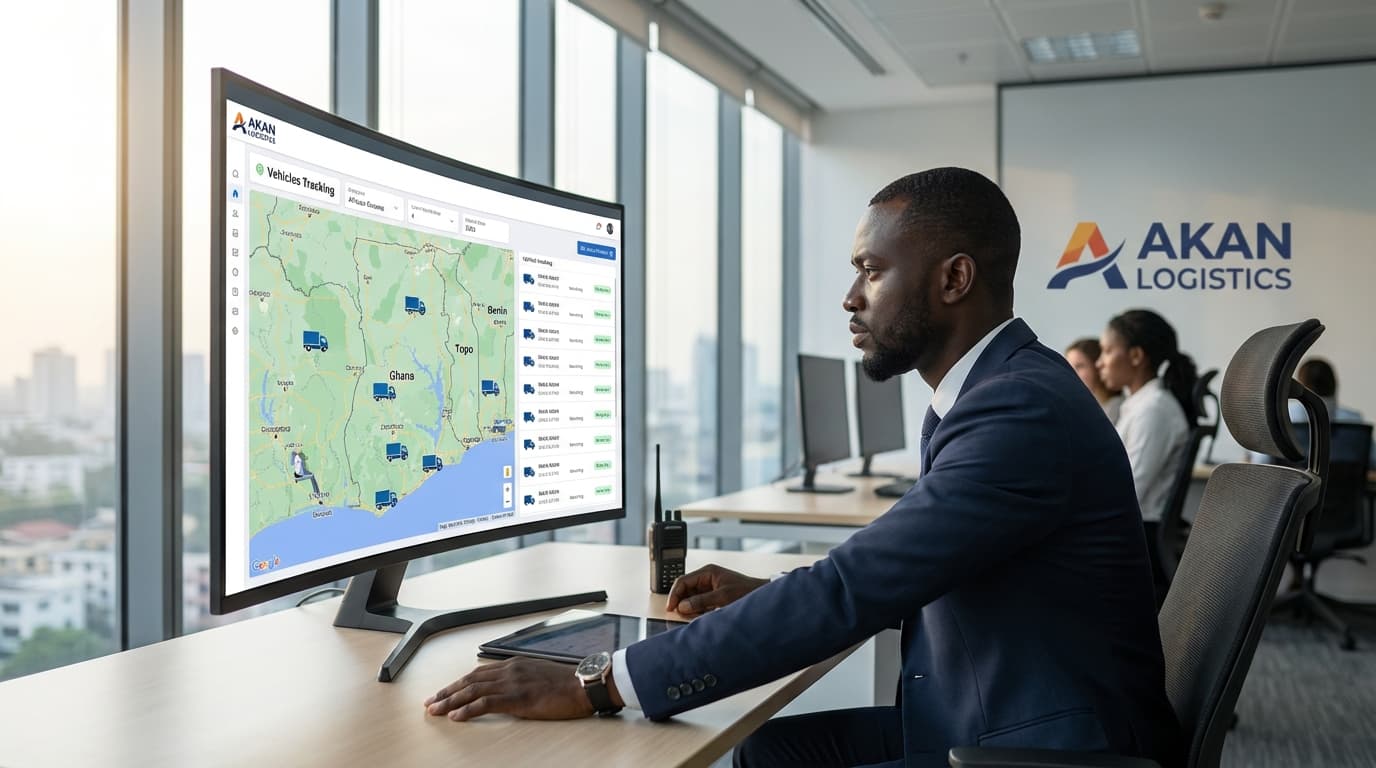
The AcesTrack dashboard shows all equipment on a single map. You can create site-specific geofences and name them (e.g., "East Legon Site," "Tema Expansion," "Kumasi Road Contract") to organize your fleet by project.
What happens if my equipment goes to Togo or Ivory Coast?
AcesTrack covers Ghana's mobile network. At border regions, coverage can continue briefly into neighbouring countries. More importantly, movement alerts fire when equipment leaves your designated geofence - which is well before the border. You have time to act before it crosses.
Can I track rented equipment I do not own?
Yes. AcesTrack can install devices on rented equipment with owner permission. Many equipment owners in Ghana now require or offer GPS tracking as part of rental agreements - it protects both parties.
Getting Started
Construction equipment is among the most valuable, most vulnerable, and most under-tracked assets in Ghana's economy. GPS tracking is not a luxury for large contractors - it is essential risk management for any company with more than two pieces of heavy equipment.
View our Construction Equipment Tracking page for full specifications and pricing, or contact us to arrange site visits and equipment assessment across Accra, Kumasi, Tema, Obuasi, and Tarkwa.
Our technical team can assess your equipment types, site locations, and network coverage before you commit - so you know exactly what you are getting.