Last month, a Toyota Camry owner in East Legon watched on his phone as thieves drove his car through Tema towards the Aflao border. Within 45 minutes, police intercepted the vehicle using coordinates from his GPS tracker. His car was recovered undamaged.
This is the power of GPS tracking technology. But how exactly does a small device in your car communicate with satellites orbiting 20,000 kilometers above Earth to pinpoint your vehicle's location?
The Basics: What GPS Actually Is
GPS stands for Global Positioning System - a network of 31 satellites maintained by the United States that continuously broadcast their position and time. Your car's GPS tracker receives these signals and uses them to calculate where it is on Earth.
Here's what makes it work: each satellite transmits a unique signal at the speed of light. Your tracker measures how long each signal takes to arrive. Since light travels at a known speed (299,792 kilometers per second), the tracker can calculate its distance from each satellite.
With signals from at least 4 satellites, the tracker triangulates your car's exact position - typically accurate to within 3-5 meters.
How Your Car Tracker Sends Data to Your Phone
Knowing your car's location is useless if that information stays in the car. This is where cellular technology comes in.
Inside every GPS tracker is a SIM card - just like the one in your phone. In Ghana, trackers typically use MTN, Vodafone, or AirtelTigo networks. When the tracker determines your car's position, it packages that data and sends it over the mobile network to AcesTrack's servers.
Our servers process the data and push it to your smartphone app. The entire process - from satellite to your screen - takes about 10-15 seconds.
What Gets Transmitted
Each data packet from your tracker includes:
- Latitude and longitude (your car's exact position)
- Speed (how fast it's moving)
- Direction (which way it's heading)
- Timestamp (when the reading was taken)
- Ignition status (engine on or off)
- Battery voltage (vehicle's electrical system health)
This information updates every 10-30 seconds when your car is moving, or every few minutes when parked - balancing real-time tracking with data costs. If your tracker isn't performing as expected, check our GPS tracker troubleshooting guide.
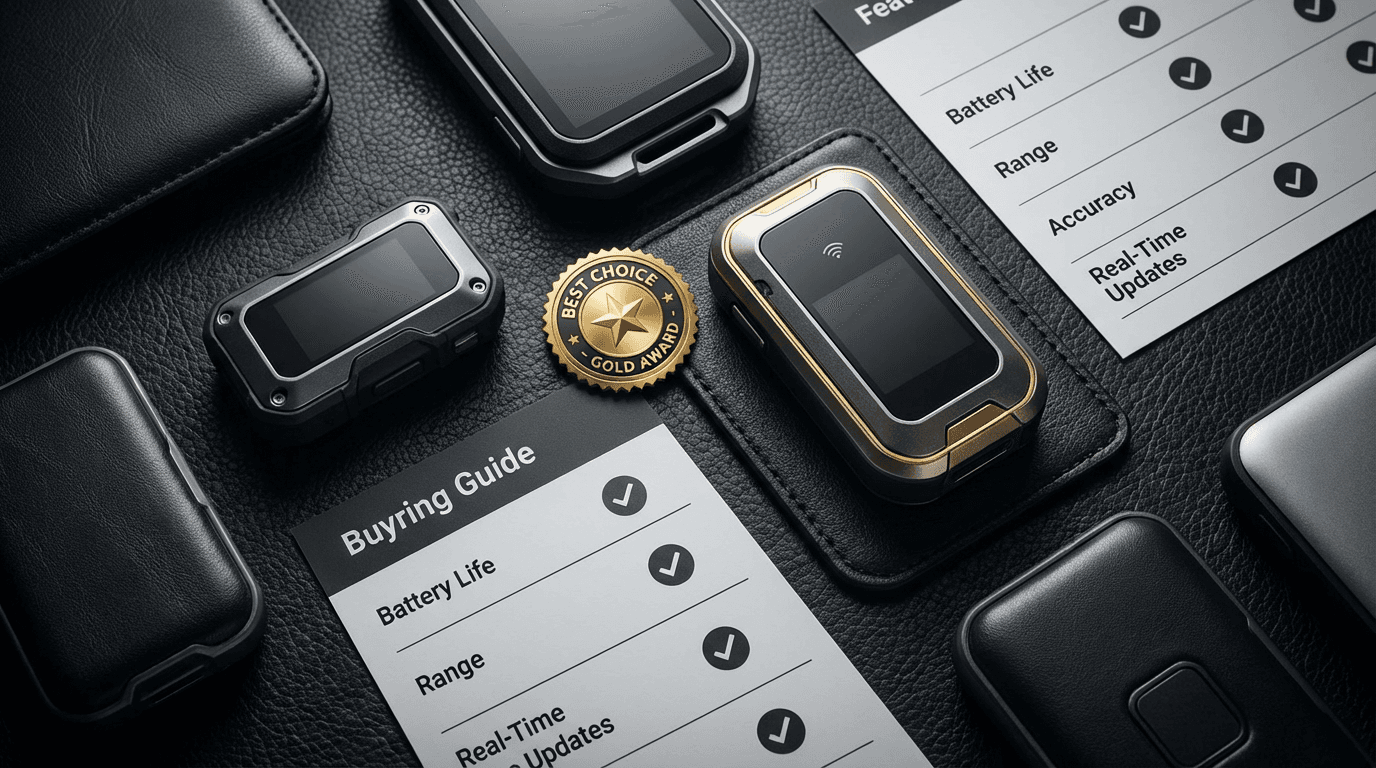
Types of GPS Trackers Available in Ghana
Not all trackers are created equal. Each type suits different needs and budgets.
Hardwired Trackers (Most Popular)
These connect directly to your car's electrical system, typically behind the dashboard or in the engine bay.
Advantages:
- Continuous power from vehicle battery
- Concealed installation deters tampering
- Features like ignition cut-off and power disconnect alerts
- No battery to charge
Best for: Personal cars, company vehicles, anyone wanting permanent protection
This is what we install for 90% of our customers in Accra, Kumasi, and across Ghana.
OBD Port Trackers
These plug into your car's OBD-II diagnostic port (the same port mechanics use to read error codes). The port is usually under your dashboard near the steering column.
Advantages:
- Easy self-installation (takes 30 seconds)
- No wiring required
- Provides vehicle diagnostic data (engine codes, fuel level)
- Easily moved between vehicles
Disadvantages:
- Visible and easy to remove
- No engine cut-off feature
- Blocks diagnostic port access
Best for: Rental cars, temporary tracking, fleet vehicles where you need quick installation
Portable Battery-Powered Trackers
These run on internal batteries and can be placed anywhere in or under the vehicle.
Advantages:
- No installation required
- Can be hidden in creative locations
- Works even if car battery is disconnected
Disadvantages:
- Requires regular charging (every 2-4 weeks)
- Larger size makes concealment harder
- Limited features compared to hardwired units
Best for: Asset tracking, vehicles you can't hardwire, backup trackers
What Happens When Thieves Try to Defeat the Tracker?
Car thieves in Ghana have become aware of GPS trackers. Here's how modern trackers stay one step ahead:
Signal Jamming Attempts
Some sophisticated thieves use GPS jammers. Our trackers detect jamming attempts and send an immediate alert to your phone: "Signal interference detected at last known location."
Power Disconnection
If someone cuts the car battery, our hardwired trackers switch to an internal backup battery that provides 4-6 hours of continued tracking - usually enough time for recovery.
Physical Removal
Trackers are installed in concealed locations that take time to find. Even if a thief locates the device, the tracker sends a "tamper alert" the moment it's disturbed.
Network Coverage: Will It Work Across Ghana?
This is a common concern - and a valid one. GPS tracking requires cellular coverage to transmit data.
In major cities (Accra, Kumasi, Takoradi, Tamale, Cape Coast), coverage is excellent. Our trackers use multi-network SIMs that automatically switch between MTN, Vodafone, and AirtelTigo to find the strongest signal.
In rural areas, coverage can be patchy. However, our trackers store location data internally when there's no signal and transmit everything once coverage returns. You'll see the complete route your vehicle took, even through areas with no service.
For journeys to neighboring countries (Togo, Ivory Coast, Burkina Faso), our trackers support roaming and continue working across borders - critical for transport companies and cross-border traders. Curious about range? Learn how far a GPS tracker can actually track.
How Accurate Is GPS Tracking?
Under normal conditions, GPS accuracy is 3-5 meters - enough to tell exactly where your car is parked on a street.
Several factors can affect accuracy:
- Urban canyons: Tall buildings can block satellite signals. In central Accra CBD, accuracy might drop to 10-15 meters.
- Covered parking: Multi-story car parks and underground garages weaken GPS signals. Our trackers use cell tower positioning as a backup.
- Weather: Heavy cloud cover has minimal impact on GPS. Even during harmattan season, accuracy remains reliable.
The Technology Behind Real-Time Alerts
GPS tracking isn't just about watching a dot on a map. The real value is in intelligent alerts that notify you before problems escalate.
Here's how alert technology works:
Movement Detection: An accelerometer inside the tracker senses when the car moves. If the ignition is off but the car is moving (being towed or pushed), you get an instant alert.
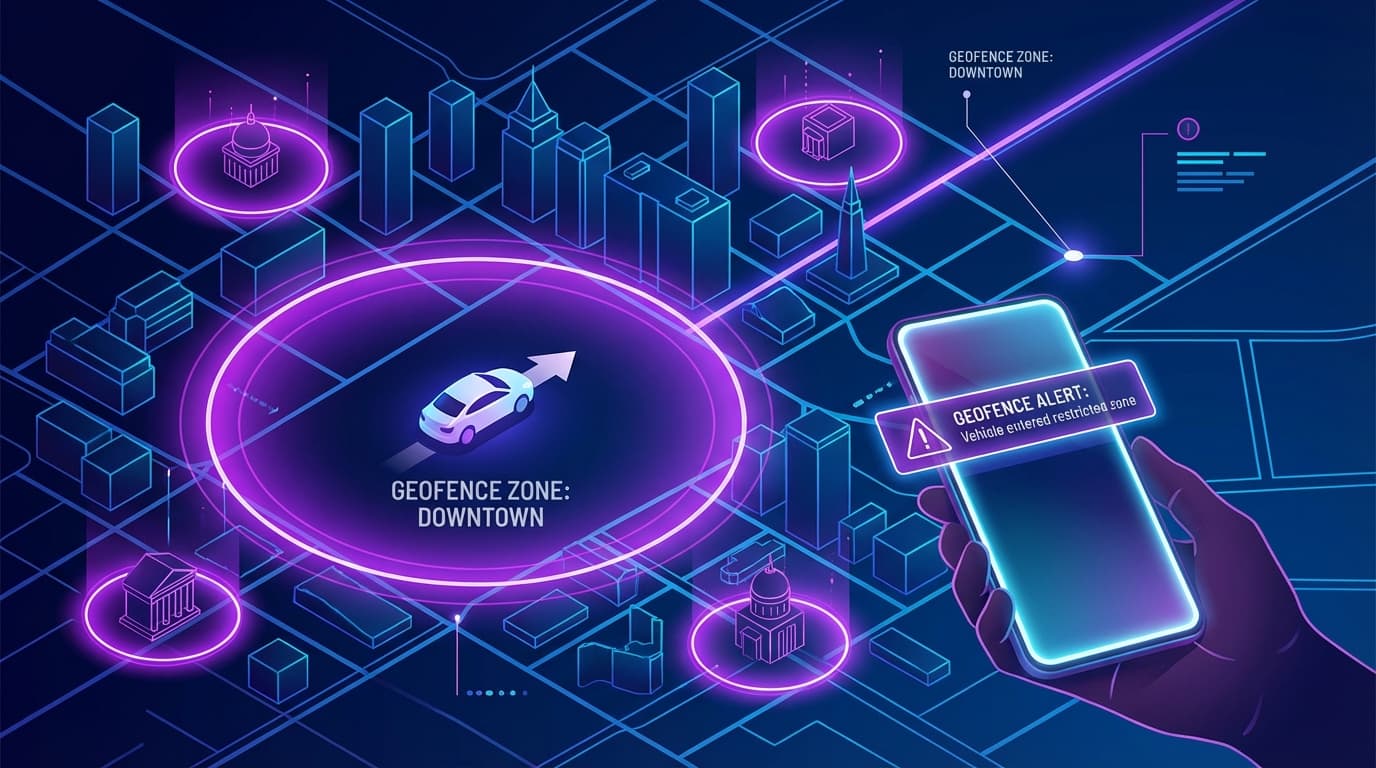
Geofencing: You draw virtual boundaries on the map (around your home, office, or your area of Accra). The tracker constantly compares its location against these boundaries and alerts you when crossed.
Speed Alerts: Set a maximum speed (useful for parents monitoring new drivers). The tracker alerts you immediately if the limit is exceeded.
Ignition Alerts: Know exactly when your car is started and stopped - useful for tracking employee vehicle use.
What You'll See on Your Phone
When you open the AcesTrack app, you see:
- Live map with your car's current position (updated in real-time)
- Trip history showing everywhere your car has been
- Speed graphs for each journey
- Stop locations with duration at each stop
- Alert history with all triggered notifications
- Reports for fuel, mileage, and driver behavior
Why This Technology Matters for Car Owners in Ghana
With vehicle theft rates climbing in urban Ghana, GPS tracking is no longer a luxury - it's essential protection.
Consider this: the average car theft in Accra takes 90 seconds. By the time you realize your car is gone, it could be 5 kilometers away. Without GPS tracking, you're relying on luck and the already-stretched Ghana Police Service.
With GPS tracking, you can:
- Watch the theft unfold on your phone in real-time
- Share live location directly with police
- Remotely disable the engine when safe to do so
- Guide recovery efforts with precise coordinates
That's why AcesTrack customers enjoy a 95% vehicle recovery rate within 24 hours. The technology works.
Ready to Protect Your Vehicle?
Now you understand how GPS tracking technology works - from satellites in space to the app on your phone. The question is: does your car have this protection?
AcesTrack offers professional installation across Ghana with trackers optimized for local network conditions. We've helped recover over 200 stolen vehicles and protected thousands more from ever being targeted.
Get a free consultation and see exactly how GPS tracking would work for your specific vehicle and situation.